Types of Acrylic: Complete Guide to Different Acrylic Sheets and Their Uses

Informational

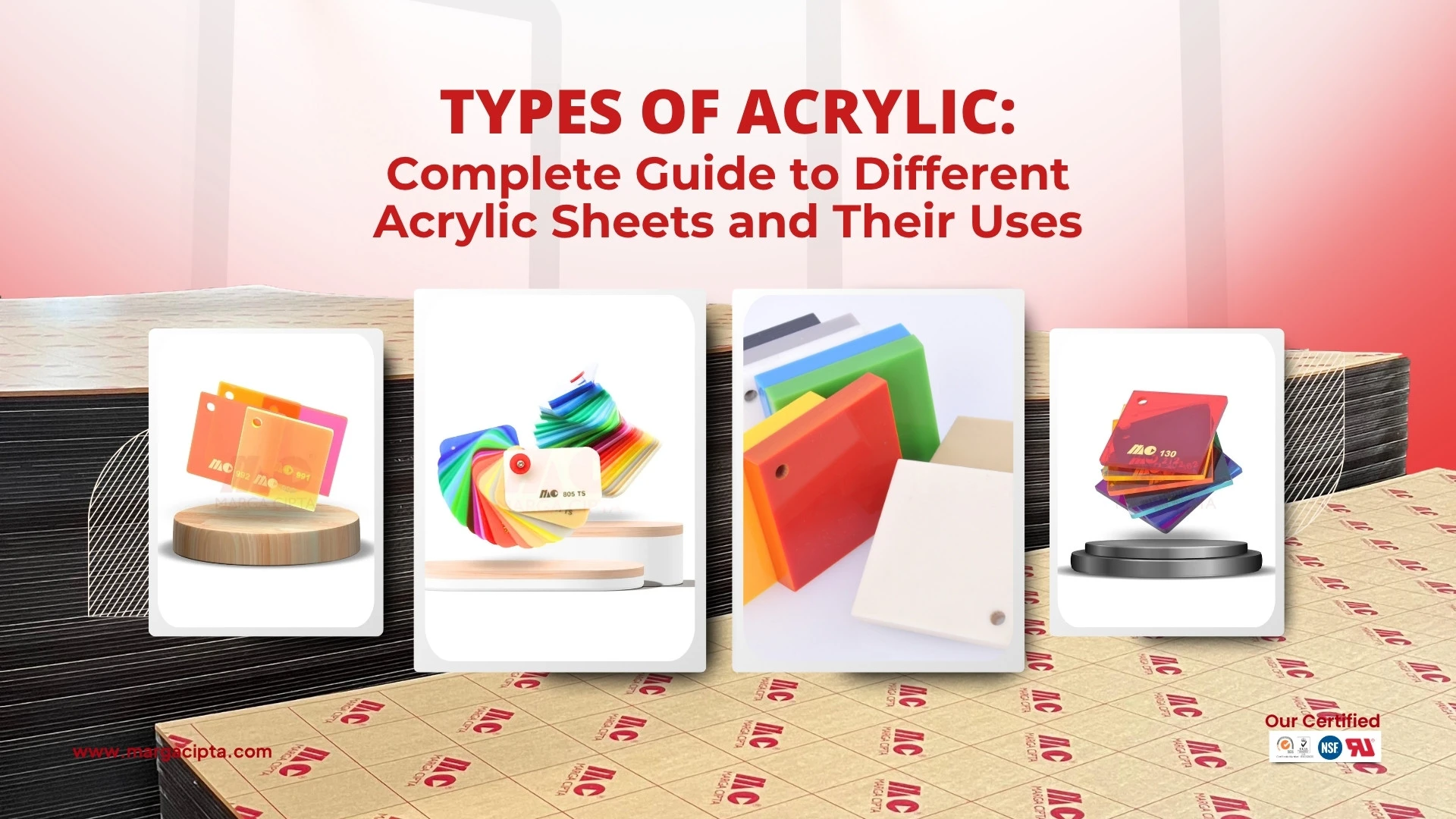
The main types of acrylic include cast acrylic, extruded acrylic, clear acrylic, colored acrylic, frosted acrylic, and mirrored acrylic.

Each type offers different characteristics, making them suitable for specific fabrication, signage, and decorative applications.

Understanding the different types of acrylic is important when selecting the right material for your project.

What is Acrylic?

Acrylic is a transparent thermoplastic material widely used as an alternative to glass. It is known for its excellent clarity, lightweight structure, and fabrication flexibility.

Compared to glass, acrylic is:

  • More impact resistant
  • Easier to fabricate
  • Lighter in weight
  • Available in various finishes and colors

These qualities make acrylic sheets popular across industries such as retail, construction, interior design, and manufacturing.

Read also: Best Acrylic Thickness for Ornaments: Size Guide for Perfect Results

1. Cast Acrylic

Cast acrylic is produced by pouring liquid acrylic into molds before curing.

This type is known for:

  • Excellent optical clarity
  • Better chemical resistance
  • Superior engraving quality
  • Stronger surface hardness

Cast acrylic is commonly used for:

  • Signage
  • Premium displays
  • Laser engraving
  • Decorative applications

Because of its high-quality finish, cast acrylic is often preferred for projects that require precision and aesthetics.

2. Extruded Acrylic

Extruded acrylic is manufactured through a continuous production process.

Compared to cast acrylic, it offers:

  • More affordable pricing
  • Consistent thickness
  • Easier thermoforming

It is commonly used for:

  • General fabrication
  • Protective panels
  • Cost-efficient production projects

While extruded acrylic is softer than cast acrylic, it remains a practical choice for many standard applications.

3. Clear Acrylic

Clear acrylic sheets are the most commonly used type.

They provide:

  • High transparency
  • Glass-like appearance
  • Smooth surface finish

Applications include:

  • Retail displays
  • Aquariums
  • Protective barriers
  • Signage

Clear acrylic is ideal when visibility and a clean aesthetic are priorities.

4. Colored Acrylic

Colored acrylic sheets are available in a wide range of solid and transparent colors.

Benefits include:

  • Consistent color throughout the sheet
  • Strong visual appeal
  • Better branding flexibility

Colored acrylic is often used for:

  • Decorative ornaments
  • Branding elements
  • Interior accents
  • Creative fabrication projects

5. Frosted Acrylic

Frosted acrylic features a matte surface that diffuses light. It is commonly selected for:

  • Privacy panels
  • Minimalist interior design
  • Elegant signage

Its soft appearance helps reduce glare and fingerprints.

6. Mirrored Acrylic

Mirrored acrylic provides a reflective surface similar to traditional mirrors but with lighter weight and better impact resistance.

Common applications include:

  • Decorative panels
  • Retail displays
  • Event decorations

It is available in various finishes such as silver, gold, and colored mirror effects.

How to Choose the Right Acrylic Type

Choosing the right acrylic depends on:

  • Application purpose
  • Fabrication method
  • Desired appearance
  • Budget considerations

For example:

  • Cast acrylic → better for engraving and premium designs
  • Extruded acrylic → suitable for cost-efficient fabrication
  • Frosted acrylic → ideal for elegant and modern finishes

Read also: Acrylic vs Glass for Plaque: Which Material is Better?

Why Material Quality Matters

High-quality acrylic sheets provide:

  • Better clarity
  • Consistent thickness
  • Improved fabrication performance

Using reliable materials helps reduce production issues and ensures professional results.

Marga Cipta supplies premium acrylic sheets in various types and finishes to support different fabrication and design needs.

Conclusion

Understanding the different types of acrylic helps you select the right material for your project.

From clear and colored acrylic to cast and mirrored finishes, each type offers unique advantages for specific applications. By choosing high-quality acrylic sheets, businesses and manufacturers can achieve more durable and visually appealing results.

Ready to explore our cast acrylic options? At Margacipta Wirasentosa, we offer high-quality clear cast acrylic sheets from 100% virgin MMA in various thicknesses and custom sizes to fit your needs.

Reach out to our Instagram or download our Product Catalog for more information.

News Release

FESPA Global Print Expo 2024

FESPA Global Print Expo returns to Amsterdam, The Netherlands next spring 2024 During 19-22 March, Europe’s leading print and signage exhibition attracts the worlds leaders in the industry to showcase their latest technology and developments. We look forward to welcoming you in Amsterdam, The Netherlands 19-22 March 2024! Visit our booth Hall 2 stand D26

Cost Breakdown: How Acrylic Can Help You Save Budget in Long-Term Projects

When planning long-term projects, material selection plays a crucial role in determining overall costs. While acrylic sheets may appear more expensive upfront compared to some alternatives, they often deliver significant acrylic cost savings over time.

Understanding the full cost breakdown can help businesses, contractors, and designers make smarter investment decisions.

Initial Material Cost vs Long-Term Value

At first glance, acrylic sheets may have a higher purchase price than basic materials such as glass or plastic composites.

However, acrylic offers superior strength-to-weight ratio and durability. This means fewer replacements, less breakage, and lower repair expenses throughout the project lifecycle.

For long-term installations like interior panels, signage, safety barriers, and industrial components, choosing acrylic reduces the risk of unexpected replacement costs.

Reduced Installation and Labor Costs

One of the key contributors to acrylic cost savings is easier installation. Acrylic sheets are significantly lighter than glass, which reduces transportation expenses and simplifies handling during installation.

Lighter materials require less structural support, allowing contractors to save on framing and reinforcement costs. Faster installation also means reduced labor hours, especially in large-scale commercial and industrial projects.

Read also: How to Identify High-Quality Cast Acrylic Sheets | Buyer’s Guide

Lower Maintenance and Replacement Expenses

Maintenance costs can quickly add up in long-term projects. Acrylic is resistant to moisture, corrosion, and many chemicals, making it suitable for both indoor and outdoor use.

Unlike glass, acrylic is less likely to shatter on impact. This minimizes repair costs and reduces downtime in operational environments such as factories, retail spaces, and public facilities. Over time, these factors contribute to substantial budget efficiency.

Energy Efficiency and Operational Savings

Acrylic sheets offer excellent light transmission, allowing natural light to pass through while maintaining insulation. In architectural applications, this can help reduce reliance on artificial lighting and lower energy consumption.

For projects such as skylights, partitions, and display panels, improved energy efficiency translates into long-term operational savings, supporting both budget and sustainability goals.

Durability and Long Service Life

High-quality acrylic sheets are designed to withstand UV exposure, temperature changes, and daily wear. This durability extends the service life of the material, reducing the frequency of replacement.

In outdoor applications, acrylic maintains clarity and structural integrity longer than many alternative materials. This longevity plays a major role in maximizing return on investment for long-term projects.

Read also: Does Acrylic Shatter? Find Out Its Strength and Durability

Cost Comparison: Acrylic vs Alternative Materials

When comparing acrylic to materials like glass or polycarbonate, it is important to evaluate total ownership cost rather than initial price alone. Acrylic often offers a balanced combination of durability, appearance, and affordability.

While glass may require frequent replacements and higher installation costs, acrylic provides a safer and more economical solution for projects that demand long-term performance.

Conclusion

Acrylic cost savings become clear when evaluating the complete cost breakdown of long-term projects. From reduced installation and maintenance expenses to energy efficiency and durability, acrylic delivers measurable financial benefits over time.

By choosing acrylic sheets for long-term applications, businesses can protect their budgets while achieving reliable performance and lasting value.

Choose the Right Cast Acrylic Color for Your Project

When working with acrylic sheets, color isn't just about aesthetics, it plays a functional role in enhancing visibility, brand identity, and even light diffusion. 

Among all types of acrylic, cast acrylic sheets stand out for their vibrant color range, clarity, and versatility in various applications.

In this article, let’s explore the different color options available for cast acrylic and how each one is commonly used in industries such as signage, interior design, and product display.

Why Choose Colored Cast Acrylic Sheets?

Cast acrylic is known for its durability, excellent workability, and brilliant color options. 

Unlike extruded acrylic, cast acrylic offers deeper pigmentation, allowing for better light diffusion, UV resistance, and long-term color stability.

Whether you're designing a lightbox, a retail display, or custom decor, the color of your acrylic sheet can influence both function and appearance.

Various Cast Acrylic Colors and Their Common Uses

1. Red Cast Acrylic

Red acrylic sheets are bold, eye-catching, and often used for:

  • LED signage and illuminated logos
  • Emergency signs and alert messages
  • Retail branding to match corporate identity

Thanks to their light-transmitting properties, red acrylic works beautifully when backlit.

2. Orange Cast Acrylic

Orange adds warmth and vibrancy. It’s ideal for:

  • Creative store displays
  • Children’s products or spaces due to its playful tone
  • Event decorations for a fun, energetic feel

Read also: What Is Cast Acrylic Used For? A Closer Look

3. Yellow Cast Acrylic

Bright and energetic, yellow acrylic is perfect for:

  • Directional signage and caution markers
  • Art installations requiring a sunny pop of color
  • Menu boards or display backdrops

4. Green Cast Acrylic

Green symbolizes freshness and balance. It’s commonly used in:

  • Eco-themed displays
  • Interior accents such as partitions or wall decor
  • Hospitality and health branding

5. Blue Cast Acrylic

Calm and professional, blue acrylic suits:

  • Corporate signage
  • Architectural features
  • Exhibition booths and brand walls

Its cool tones offer a sense of trust and reliability.

6. Purple Cast Acrylic

Often associated with creativity and luxury, purple is used in:

  • Boutique signage
  • Cosmetics displays
  • Artistic or promotional installations

It’s a strong choice for niche branding and elegant design.

Read also: Benefits of Using Clear Cast Acrylic Sheet

7. Pink Cast Acrylic

Fun, friendly, and soft, pink acrylic is great for:

  • Beauty product displays
  • Kids' room decor
  • Event props for birthdays, weddings, or launches

Pink offers emotional warmth and visual softness.

8. Clear/Transparent Cast Acrylic

The most versatile option, clear acrylic is ideal for:

  • Protective barriers and sneeze guards
  • Display cases and shelves
  • DIY projects and signage overlays

Its high light transmission and glass-like appearance make it perfect for showcasing products.

9. White Opaque Cast Acrylic

White sheets are commonly used for:

  • Lightboxes and illuminated signs
  • Acrylic boxes for packaging or storage
  • Architectural models and minimalist design features

Opaque white diffuses light beautifully and offers a clean, modern finish.

Choosing the Right Color for Your Application

When selecting a color for your acrylic sheet, consider:

  • Lighting conditions (especially for backlit applications)
  • Brand or thematic color consistency
  • Functionality. For example, warning signs should use red or yellow
  • Visual impact depending on the setting (retail, industrial, personal)

Colored cast acrylic sheets offer endless possibilities for creative and functional applications. Whether you're a designer, fabricator, or business owner, choosing the right acrylic color can enhance the overall effect of your project.

At Margacipta Wirasentosa, we provide high-quality cast acrylic sheets in a wide range of colors, from bold reds to crisp whites, ensuring you have the perfect match for your needs.

Contact our team today or explore our Instagram to explore our color range and find the perfect sheet for your next project.

Acrylic Sheet for Display Stand: Best Thickness and Type to Use

Acrylic sheet has become one of the most popular materials for display stands due to its clarity, durability, and versatility. Whether used in retail stores, exhibitions, or offices, choosing the right acrylic sheet for display stand is essential to ensure both aesthetics and functionality.

However, many people still struggle to determine the best thickness and type for their specific needs.

Why Acrylic Sheet is Ideal for Display Stands

Acrylic offers several advantages compared to glass or other materials:

  • High transparency similar to glass but lighter
  • Shatter-resistant and safer to use
  • Easy to fabricate (cutting, bending, engraving)
  • Professional and modern appearance

These qualities make acrylic sheets a top choice for product displays, signage, brochure holders, and more.

Read also: A Step-by-Step Guide on How to Cut Acrylic Sheet Safely

Best Thickness for Acrylic Display Stand

Choosing the right thickness depends on the size and purpose of the display.

Here are common recommendations:

  • 2-3 mm:
    Suitable for small, lightweight displays such as price tags or brochure holders.
  • 4-5 mm:
    Ideal for medium-sized display stands with moderate weight.
  • 6 mm and above:
    Recommended for larger or heavy-duty displays that require extra strength and stability.

Using acrylic that is too thin may cause bending or cracking, while overly thick sheets can increase costs unnecessarily.

Types of Acrylic Sheet

Understanding the different types of acrylic is equally important.

1. Cast Acrylic

  • Higher clarity and premium finish
  • Better for laser cutting and polishing
  • More durable and resistant to chemicals

Best for high-end display stands where appearance matters.

2. Extruded Acrylic

  • More affordable
  • Consistent thickness
  • Easier for mass production

Suitable for standard display applications with budget considerations.

Clear vs Colored Acrylic

  • Clear acrylic: Most common, ideal for showcasing products without distraction
  • Colored acrylic: Adds branding and visual appeal
  • Frosted acrylic: Provides a premium, soft look and reduces glare

The choice depends on branding and display goals.

Read also: How to Choose UV Resistant Acrylic Sheets for Outdoor Applications

Tips for Choosing the Right Acrylic Sheet

To ensure the best result:

  • Match thickness with the load and size of display
  • Choose cast acrylic for premium finishes
  • Consider environment (indoor vs outdoor use)
  • Ensure proper cutting and bending process

Common Mistakes to Avoid

  • Using acrylic that is too thin for heavy products
  • Ignoring surface finish quality
  • Choosing the wrong type for fabrication method

These mistakes can reduce durability and visual impact.

Conclusion

Selecting the right acrylic sheet for the display stand involves balancing thickness, type, and purpose. By understanding these factors, you can create displays that are both durable and visually appealing.

Looking for high-quality acrylic sheets?

Marga Cipta provides a wide range of acrylic sheets with various thicknesses and types, suitable for display stands, signage, and custom applications. Get the right material to elevate your display quality.