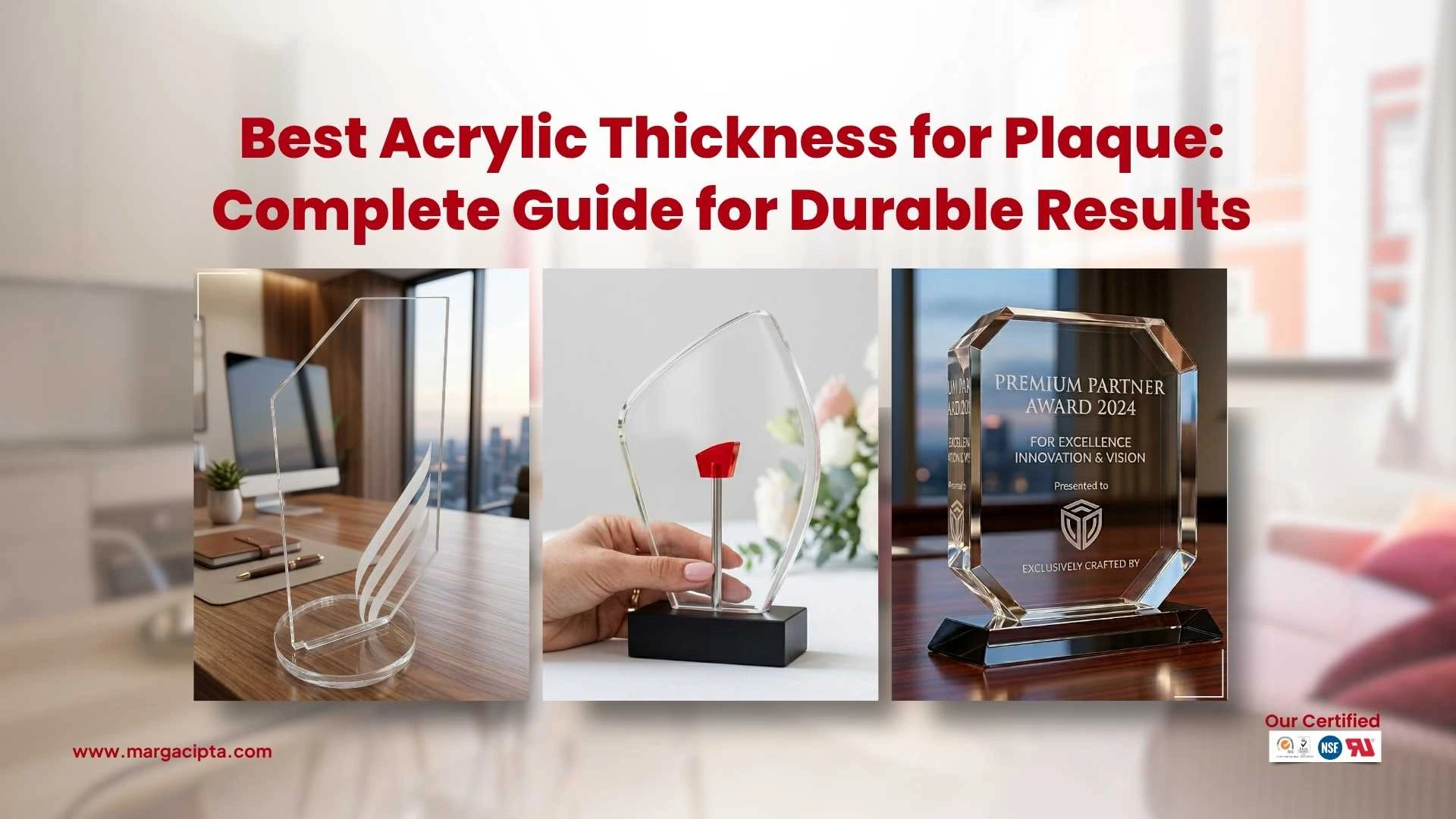
Best Acrylic Thickness for Plaque: Complete Guide for Durable Results

Informational

The best acrylic thickness for plaque is typically between 3 mm and 5 mm.

This range offers the ideal balance between durability, stability, and a clean professional appearance for most applications.

Choosing the right thickness is essential because it directly affects how the plaque looks, feels, and performs over time.

Why Acrylic Thickness Matters

Acrylic plaques are widely used for signage, awards, and displays due to their clarity and modern finish. However, thickness plays a critical role in ensuring the plaque does not bend, crack, or look disproportionate.

  • Too thin → may bend or feel low quality
  • Too thick → looks bulky and increases cost

The goal is to match thickness with the size and purpose of the plaque.

Read also: How to Clean Acrylic Without Scratching

Recommended Thickness Based on Use Case

Here’s a quick guide to help you decide:

3 mm acrylic sheet

  • Best for small plaques, nameplates, or wall-mounted signage.
  • Offers a sleek and lightweight appearance.

4 mm acrylic sheet

  • Ideal for medium-sized plaques that require better rigidity.
  • Commonly used for office signage and branding displays.

5 mm acrylic sheet

  • Suitable for larger plaques or premium applications.
  • Provides a solid, high-end feel with improved durability.

For most commercial and decorative uses, this 3–5 mm range delivers consistent and reliable performance.

Key Factors to Consider

Beyond thickness, several factors influence your final choice:

1. Plaque Size

Larger plaques require thicker acrylic to prevent bending or warping over time.

2. Mounting Method

Wall-mounted plaques can use thinner sheets, while freestanding designs need additional thickness for stability.

3. Design Complexity

Engraving, UV printing, or layered designs may benefit from slightly thicker acrylic for better visual depth.

Fabrication Compatibility

Acrylic sheets are highly compatible with modern fabrication methods such as:

  • Laser cutting
  • UV printing
  • Engraving

Using the correct thickness ensures clean cuts, consistent engraving depth, and a more professional finish.

High-quality acrylic sheets also reduce the risk of chipping or uneven edges during production.

Read also: How to Choose UV Resistant Acrylic Sheets for Outdoor Applications

Why Acrylic is Ideal for Plaques

Compared to other materials, acrylic offers:

  • Excellent clarity (glass-like appearance)
  • Lightweight structure
  • Good impact resistance
  • Easy fabrication

These characteristics make acrylic a practical and scalable material for plaque production.

Material Quality Still Matters

Even with the right thickness, material quality is critical.

High-quality acrylic sheets provide:

  • Consistent thickness
  • Better clarity
  • Improved durability

For businesses, this means fewer production issues and more consistent output.

Marga Cipta supplies premium acrylic sheets designed for fabrication processes, ensuring reliable performance across different applications.

Conclusion

The best acrylic thickness for plaque is generally between 3 mm and 5 mm, depending on size and application.

By choosing the right thickness and using high-quality acrylic sheets, you can achieve plaques that are durable, visually appealing, and professionally finished.

News Release

A Step-by-Step Guide on How to Cut Acrylic Sheet Safely

Acrylic sheets are widely used in industries such as signage, display manufacturing, interior design, and fabrication. Because acrylic is lightweight and easy to shape, it can be cut into various sizes and forms for different applications.

However, cutting acrylic incorrectly may lead to cracking, chipping, or rough edges. To achieve clean and professional results, it is important to follow proper cutting techniques.

This step-by-step guide explains how to cut acrylic sheet properly and safely using commonly available tools.

Step 1: Choose the Right Cutting Tool

The cutting method depends on the thickness of the acrylic sheet.

Common tools used to cut acrylic include:

  • Acrylic scoring knife for thin sheets
  • Table saw or circular saw for thicker panels
  • Laser cutting machines for precise fabrication
  • Jigsaw for curved cuts

For thin sheets under 3 mm, a scoring knife is usually sufficient. For thicker acrylic, power tools are recommended.

Read also: Acrylic Sheet for Interior Design: Modern Applications for 2026

Step 2: Mark the Cutting Line

Before cutting, measure the acrylic sheet carefully and mark the cutting line using a ruler and marker.

To improve accuracy:

  • Use a metal ruler or straight edge
  • Double-check measurements
  • Keep the protective film on the acrylic surface to prevent scratches

Precise marking helps ensure a clean and straight cut.

Step 3: Secure the Acrylic Sheet

Place the acrylic sheet on a stable work surface and secure it using clamps if necessary.

This prevents the material from moving during the cutting process and reduces the risk of uneven cuts.

If using power tools, make sure the sheet is supported evenly on both sides.

Step 4: Cut the Acrylic Slowly

When cutting acrylic, slow and steady movement is important.

For scoring knives:

  1. Score the marked line multiple times using firm pressure.
  2. Move the sheet to the edge of a table.
  3. Snap the sheet carefully along the scored line.

For saw cutting:

  • Use fine-tooth blades designed for plastics.
  • Avoid cutting too fast to prevent melting or chipping.

Read also: How to Identify High-Quality Cast Acrylic Sheets | Buyer’s Guide

Step 5: Smooth the Edges

After cutting, the acrylic edge may feel rough or sharp. To achieve a smooth finish:

  • Use fine sandpaper to polish the edge
  • Apply gradual pressure while sanding
  • Clean the surface after finishing

For professional fabrication, polishing techniques such as flame polishing or buffing may also be used.

Safety Tips When Cutting Acrylic

Always prioritize safety when working with acrylic sheets. Important safety precautions include:

  • Wear safety glasses to protect your eyes
  • Use gloves to avoid cuts from sharp edges
  • Ensure proper ventilation when using power tools
  • Keep hands away from the blade during cutting

These steps help reduce the risk of injury and improve cutting accuracy.

Conclusion

Learning how to cut acrylic sheet properly can significantly improve the quality of fabrication projects.

By using the right tools, marking accurately, cutting slowly, and smoothing the edges, you can achieve clean, professional results without damaging the material.

Whether you are working on signage, display stands, or DIY projects, proper cutting techniques will help you maximize the versatility of acrylic sheets.

MARGA CIPTA is announce the addition of Pantone's 2023

From the vibrant and bold, to the classic and traditional, color has the power to evoke an emotional response. MARGA CIPTA has been a leader in providing our customers with the highest quality cast acrylic sheet products. We are pleased to announce the addition of Pantone's 2023 Color of the Year, Viva Magenta 18-1750.

Viva Magenta will be perfect for a variety of applications, from color-coding locations and items to make the most of your space. We encourage you to explore all of our acrylic products.

Fabricators, designers, architects and retail clients expect consistency and quality and Marga Cipta's high optical quality acrylic product, great customer service and a responsive production team is your perfect supplier partner.

For more info contact us or your account rep for more details and current prices

Introduction to Margacipta Cast Acrylic Sheet Factory

Introduction to Margacipta Cast Acrylic Sheet Factory

Margacipta is a leading manufacturer of cast acrylic sheets, renowned for its commitment to quality, innovation, and sustainability. With state-of-the-art facilities and a dedicated team of professionals, Margacipta has established itself as a trusted supplier in the industry.

Manufacturing Process at Margacipta

At Margacipta, the manufacturing process begins with the careful selection of raw materials. Only the highest quality methyl methacrylate (MMA) and polymethyl methacrylate (PMMA) pellets are used, ensuring superior performance and durability.

Advantages of Margacipta Cast Acrylic Sheets

Margacipta cast acrylic sheets offer numerous advantages over other materials. Their exceptional clarity, scratch resistance, and UV stability make them ideal for a wide range of applications. Additionally, Margacipta's commitment to environmental consciousness ensures that its products are not only high-quality but also sustainable.

Applications of Margacipta Cast Acrylic Sheets

Margacipta cast acrylic sheets are used in various industries, including architectural glazing, signage and displays, and the automotive industry. Their versatility and aesthetic appeal make them a popular choice for designers and manufacturers seeking reliable and cost-effective solutions.

Challenges Faced by Margacipta

Despite its success, Margacipta faces challenges such as market competition, rapid technological advancements, and fluctuations in raw material sourcing. However, with its dedication to innovation and continuous improvement, Margacipta is well-positioned to overcome these challenges and thrive in the industry.

Future Prospects of Margacipta

The future looks promising for Margacipta, with growing demand for high-quality cast acrylic sheets worldwide. As the industry evolves and new opportunities emerge, Margacipta remains committed to delivering innovative solutions that meet the needs of its customers and contribute to sustainable development.

Conclusion

In conclusion, Margacipta is a leading manufacturer of cast acrylic sheets, known for its commitment to quality, innovation, and sustainability. With its advanced manufacturing processes, superior products, and dedication to environmental consciousness, Margacipta is poised for continued success in the years to come.


What is Satin Acrylic? A Complete Guide to Its Look and Function

Satin acrylic is a type of acrylic sheet with a smooth matte surface that reduces glare while maintaining a clean and premium appearance.

It is commonly used for signage, interior design, displays, and decorative applications where a softer visual finish is preferred over high gloss.

Compared to standard glossy acrylic, satin acrylic provides a more subtle and elegant look while still offering the durability and fabrication flexibility of acrylic material.

What Makes Satin Acrylic Different?

The main difference between satin acrylic and regular acrylic lies in the surface finish.

Standard acrylic sheets usually have a glossy, reflective appearance. Satin acrylic, on the other hand, features a matte or low-sheen surface that diffuses light more evenly.

This creates:

  • Reduced reflections
  • Softer visual appearance
  • Better fingerprint resistance
  • More modern aesthetic

Because of these characteristics, satin acrylic is often selected for projects that require a premium and minimalistic look.

Read also: Best Acrylic Thickness for Ornaments: Size Guide for Perfect Results

Key Features of Satin Acrylic

Satin acrylic combines aesthetics with practical functionality.

Some of its main advantages include:

1. Reduced Glare

The matte surface helps minimize light reflection, making it suitable for brightly lit spaces.

2. Elegant Appearance

Its smooth satin finish creates a sophisticated and modern visual effect.

3. Better Fingerprint Resistance

Compared to glossy acrylic, fingerprints and smudges are less visible on satin surfaces.

4. Lightweight and Durable

Like other acrylic sheets, satin acrylic remains lightweight while offering good impact resistance.

Common Applications of Satin Acrylic

Satin acrylic is widely used across commercial and decorative industries.

Popular applications include:

  • Interior signage
  • Office branding panels
  • Decorative wall elements
  • Retail displays
  • Furniture accents
  • Partitions and privacy panels

Its clean appearance makes it especially popular for modern architectural and interior concepts.

Satin Acrylic vs Glossy Acrylic

Both materials offer unique advantages depending on the intended use.

Satin Acrylic

  • Matte appearance
  • Softer reflections
  • Premium minimal look
  • Better for modern interiors

Glossy Acrylic

  • Highly reflective finish
  • Stronger color vibrancy
  • More transparent appearance
  • Suitable for bold visual displays

The choice depends on whether the project prioritizes subtle elegance or vibrant visual impact.

Fabrication Compatibility

Satin acrylic sheets are compatible with various fabrication methods such as:

  • Laser cutting
  • CNC cutting
  • UV printing
  • Engraving

High-quality satin acrylic helps ensure:

  • Clean cutting results
  • Consistent surface texture
  • Better finishing quality

Proper handling during fabrication is important to preserve the matte surface appearance.

Read also: Best Acrylic Thickness for Plaque: Complete Guide for Durable Results

Why Material Quality Matters

Not all satin acrylic sheets deliver the same finish and consistency.

Premium-quality acrylic offers:

  • Uniform satin texture
  • Consistent thickness
  • Better durability during processing

For businesses and manufacturers, using high-quality materials helps improve production efficiency and final product appearance.

Marga Cipta supplies high-quality acrylic sheets in various finishes, including satin acrylic for fabrication and decorative applications.

Conclusion

Satin acrylic is an excellent material choice for projects that require a modern, elegant, and low-glare appearance.

With its matte finish, durability, and fabrication flexibility, satin acrylic is widely used for signage, interiors, and decorative applications. Choosing high-quality acrylic sheets helps ensure more professional and visually consistent results.

Ready to explore our cast acrylic options? At Margacipta Wirasentosa, we offer high-quality clear cast acrylic sheets from 100% virgin MMA in various thicknesses and custom sizes to fit your needs.

Reach out to our Instagram or download our Product Catalog for more information.