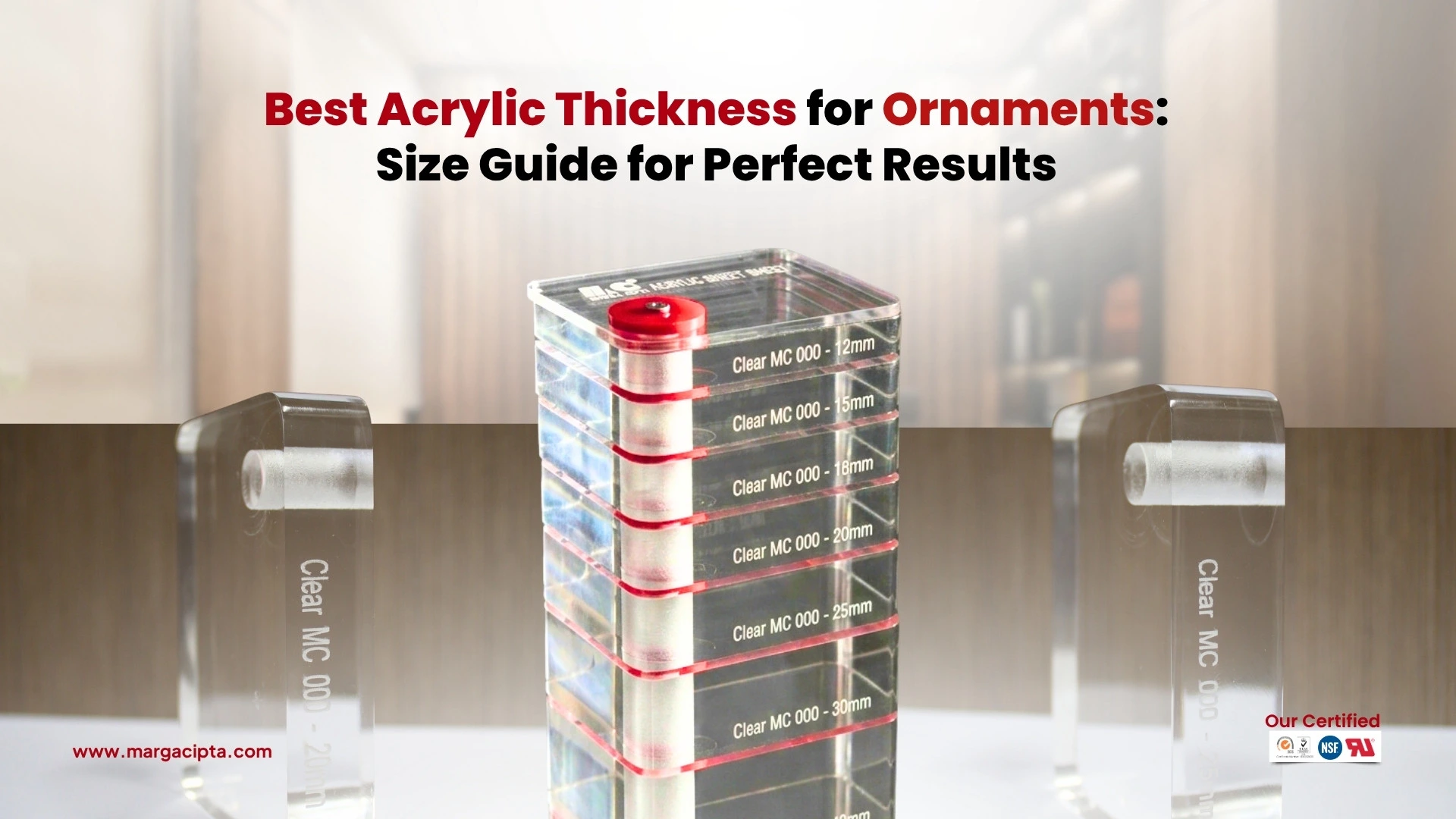
Best Acrylic Thickness for Ornaments: Size Guide for Perfect Results

Informational

The best acrylic thickness for ornaments is typically between 2 mm and 3 mm.

This range provides the ideal balance between durability, lightweight structure, and ease of cutting.

Choosing the right thickness is crucial to ensure that ornaments are strong enough to hold their shape while still looking clean and refined.

Why Thickness Matters for Ornaments

Ornaments are often designed to be lightweight and decorative. Using the wrong thickness can affect both appearance and performance:

  • Too thin → may bend or break easily
  • Too thick → looks bulky and harder to cut

The right thickness ensures a professional finish without compromising functionality.

Read also: Colored Acrylic Sheet for Ornaments: Types, Colors, and Applications

Recommended Thickness Based on Use

Here’s a practical guide:

2 mm acrylic sheet

  • Best for small and lightweight ornaments
  • Ideal for hanging decorations and detailed designs

3 mm acrylic sheet

  • Suitable for slightly larger or layered ornaments
  • Provides better rigidity and durability

For most applications, these two thickness options cover the majority of design needs.

Factors to Consider When Choosing Thickness

1. Ornament Size

Larger ornaments require thicker acrylic to maintain shape and prevent bending.

2. Design Complexity

Intricate designs benefit from thinner sheets for easier cutting and finer detail.

3. Usage Type

If the ornament will be handled frequently or used long-term, slightly thicker acrylic offers better durability.

Fabrication Considerations

Acrylic sheets are widely used in fabrication processes such as:

  • Laser cutting
  • Engraving
  • UV printing

Using the correct thickness ensures clean edges, precise cuts, and minimal material waste.

Thinner sheets are easier to cut, while thicker sheets provide a more solid feel.

Why Acrylic is Ideal for Ornaments

Acrylic is a preferred material because it offers:

  • Smooth surface for clean finishing
  • High clarity and color options
  • Lightweight structure
  • Good durability for decorative use

These qualities make it suitable for both handmade and mass-produced ornaments.

Read also: Acrylic vs Glass for Plaque: Which Material is Better?

Importance of Material Quality

Even with the right thickness, material quality plays a key role.

High-quality acrylic sheets provide:

  • Consistent thickness
  • Better cutting performance
  • Reduced risk of cracking

For businesses, this ensures more efficient production and consistent output.

Marga Cipta offers high-quality acrylic sheets suitable for various ornament applications, supporting both small-scale and bulk production needs.

Conclusion

The best acrylic thickness for ornaments is generally between 2 mm and 3 mm, depending on size and design.

By choosing the right thickness and using high-quality acrylic sheets, you can achieve ornaments that are durable, lightweight, and visually appealing.

Ready to explore our cast acrylic options? At Margacipta Wirasentosa, we offer high-quality clear cast acrylic sheets from 100% virgin MMA in various thicknesses and custom sizes to fit your needs.

Reach to our Instagram or download our Product Catalog for more information.


News Release

Acrylic vs Polycarbonate: Full Comparison

When choosing the right plastic material for your project, the debate between acrylic vs polycarbonate often comes up. 

Both materials are widely used in industries such as construction, signage, and manufacturing, but they have distinct characteristics that make them suitable for different applications.

Acrylic Versus Polycarbonate

Understanding their differences can help you make a more informed decision based on performance, durability, and cost.

1. Strength and Impact Resistance

One of the key differences between acrylic and polycarbonate lies in their strength, but for most applications, acrylic already offers more than enough durability.

Acrylic is a strong and rigid material, even stronger than glass in many cases, making it highly reliable for everyday use. Its solid structure allows it to maintain shape and stability, which is especially important for applications like displays, signage, partitions, and decorative panels.

While polycarbonate is often highlighted for its extreme impact resistance, this level of durability is typically only necessary for high-stress or industrial applications. For general commercial and design purposes, acrylic provides the ideal balance between strength and functionality.

Read also: How to Identify High-Quality Cast Acrylic Sheets

2. Clarity and Aesthetics

If visual clarity is your top priority, acrylic is the clear winner. Acrylic sheets offer exceptional optical clarity, often compared to glass, with a light transmission rate of up to 92%.

This makes it ideal for applications such as retail displays, aquariums, and architectural elements.

Polycarbonate is slightly less clear and may have a subtle haze. While still transparent, it does not provide the same premium look as acrylic.

3. Scratch Resistance

Acrylic has better natural scratch resistance compared to polycarbonate. This makes it more suitable for applications where surface appearance is important.

Polycarbonate, while stronger, is more prone to scratches and often requires additional coatings to maintain its appearance over time.

4. Weather and UV Resistance

Acrylic performs very well in outdoor environments. It has excellent UV resistance and does not yellow easily, making it a great choice for outdoor signage, skylights, and decorative panels.

Polycarbonate can also be used outdoors but usually requires UV coating to prevent yellowing and degradation over time.

5. Workability and Fabrication

Acrylic is easier to cut, polish, and thermoform. It provides clean edges and a glossy finish, making it a favorite for design-focused applications.

Polycarbonate is more flexible and harder to crack during fabrication, but it can be more challenging to achieve a polished, high-end finish.

Read also: Acrylic for Industrial Use: From Machine Guards to Safety Barriers

6. Cost Consideration

In general, acrylic is more affordable than polycarbonate. If budget is a key factor and extreme impact resistance is not required, acrylic is often the more cost-effective option.

Polycarbonate tends to be more expensive due to its superior strength and durability.

Conclusion

The choice between acrylic vs polycarbonate ultimately depends on your project needs. If you prioritize clarity, aesthetics, and cost-efficiency, acrylic is the better option. However, if impact resistance and durability are critical, polycarbonate is the superior material.

For most commercial and design applications, acrylic offers the best balance between performance and visual appeal.

Ready to explore your clear cast acrylic options? At Margacipta Wirasentosa, we offer high-quality clear cast acrylic sheets from 100% virgin MMA in various thicknesses and custom sizes to fit your needs.

Reach to our Instagram or download our Product Catalog for more information.
100% Virgin MMA: The Key to High-Quality Acrylic Sheets

When it comes to producing premium acrylic sheets, the choice of raw materials makes all the difference. The highest-quality acrylic is manufactured using 100% virgin MMA (Methyl Methacrylate)

Unlike recycled or blended materials, virgin MMA guarantees outstanding clarity, strength, and long-term durability. 

This is why industries that demand precision and consistency, such as signage, architecture, medical, and food-related sectors, use acrylic made with virgin MMA.

What is Virgin MMA in Acrylic?

Methyl Methacrylate, or MMA, is the primary raw ingredient used in acrylic sheet production. When a sheet is labeled 100% virgin MMA, it means the acrylic is made from pure, first-use material with no recycled additives. 

This ensures that the end product is free from impurities, bubbles, or inconsistencies that could affect appearance and performance. By contrast, recycled or mixed-content acrylic often suffers from discoloration, reduced clarity, and shorter lifespan. 

For applications where quality is non-negotiable, virgin MMA remains the industry’s preferred standard.

Read also: What Is Cast Acrylic Used For? A Closer Look

Advantages of 100% Virgin MMA in Acrylic Sheets

1. Exceptional Clarity

One of the most visible advantages of virgin MMA acrylic is its crystal-clear transparency. With excellent light transmission up to 92%, these sheets rival the clarity of glass while being lighter and safer. 

This makes acrylic ideal for signage, displays, and architectural features where visual impact matters.

2. Stronger and More Durable

Acrylic made from recycled content can become brittle over time. 

In contrast, 100% virgin MMA produces sheets with superior impact strength and durability. They are less likely to crack, making them suitable for heavy-duty applications such as construction panels, protective barriers, and furniture.

3. Consistent Quality

Virgin MMA eliminates impurities that often cause uneven color or thickness. As a result, every sheet maintains uniform optical and mechanical properties

This consistency is critical for industries that require reliable materials, such as medical equipment manufacturing and precision engineering.

4. Better Weather and UV Resistance

Outdoor projects demand materials that can withstand sunlight, rain, and temperature changes.

Virgin MMA-based acrylic is resistant to yellowing, warping, and degradation, making it perfect for outdoor signage, skylights, and architectural.

5. Safe for Sensitive Applications

Because of its purity, virgin MMA acrylic is safer for environments where hygiene is a priority.

Certified sheets can be used in food displays, medical devices, and cleanroom facilities without risk of contamination. Some variants are even NSF-certified, ensuring compliance with international safety standards.

Read also: Why Cast Acrylic Is Better Than Glass: Benefits You Should Know

Applications of Virgin MMA Acrylic Sheets

The versatility of 100% virgin MMA acrylic makes it popular across industries:

  • Signage and Displays: Clear surfaces enhance print and lighting, delivering vibrant visuals.
  • Construction and Architecture: Used in windows, partitions, skylights, and decorative panels due to its durability.
  • Food Industry: NSF-certified acrylic ensures safety for food contact, ideal for display cases and hygienic covers.
  • Medical and Laboratory Equipment: Trusted for its purity and reliability in sensitive environments.
  • Furniture and Interior Design: Offers both aesthetics and functionality with long-lasting strength.

Choosing acrylic sheets made from 100% virgin MMA is an investment in quality, safety, and longevity. With superior clarity, strength, and resistance to outdoor conditions, virgin MMA ensures that acrylic sheets perform at the highest standard. 

Whether you are in signage, construction, food, or medical industries, selecting virgin MMA acrylic helps you achieve the best results.

PT Margacipta Wirasentosa produces high-quality acrylic using 100% virgin MMA, delivering consistent clarity, strength, and NSF-certified options (clear and white opal). Contact us to info@margacipta.com to get the right acrylic solution for your business.

How to Identify High-Quality Cast Acrylic Sheets | Buyer’s Guide

Cast acrylic sheets are widely used across industries, from interior design and signage to industrial equipment and medical applications. However, not all acrylic sheets offer the same level of quality.

Choosing high-quality cast acrylic sheets is essential to ensure durability, clarity, and long-term performance. This guide will help you identify premium cast acrylic sheets and avoid costly mistakes in your projects.

1. Check Optical Clarity and Surface Finish

One of the most noticeable characteristics of high-quality cast acrylic sheets is their exceptional clarity.

Premium cast acrylic offers glass-like transparency with minimal distortion. When viewed from different angles, the surface should appear smooth, glossy, and free from waves, bubbles, or cloudiness.

Lower-quality acrylic often looks slightly hazy or uneven, especially under strong lighting. For applications such as display panels, signage, or interior partitions, optical clarity is a key indicator of quality.

Read also: Acrylic Sheet for Interior Design: Modern Applications for 2026 | Marga Cipta

2. Consistent Thickness Across the Sheet

Thickness consistency is a critical factor in determining acrylic quality. High-quality cast acrylic sheets are manufactured using controlled casting processes that ensure even thickness from edge to edge.

Inconsistent thickness can cause problems during fabrication, such as uneven bending, poor fitting, or structural weakness.

To check this, measure the sheet at several points. Premium cast acrylic will show minimal variation, making it ideal for precise cutting, machining, and thermoforming.

3. Strength and Impact Resistance

Cast acrylic is known for being stronger and more rigid than extruded acrylic. High-quality cast acrylic sheets offer excellent impact resistance, reducing the risk of cracking or breaking during installation and use.

You can often feel the difference: premium acrylic sheets are more solid and stable, especially in thicker options.

This makes them suitable for demanding applications such as machine guards, safety barriers, furniture components, and architectural elements.

4. Resistance to UV and Weather Conditions

Another important sign of high-quality cast acrylic sheets is UV resistance. Premium acrylic is designed to withstand prolonged exposure to sunlight without yellowing or becoming brittle over time.

This property is crucial for outdoor signage, skylights, and exterior design elements. Acrylic sheets with poor UV resistance may discolor, lose clarity, and require early replacement, increasing long-term costs.

Read also: The Best Cast Acrylic Sheet

5. Ease of Fabrication and Finishing

High-quality cast acrylic sheets are easier to work with during cutting, engraving, drilling, and polishing. Clean edges, smooth laser cuts, and polished finishes are indicators of superior material quality.

Inferior acrylic may chip, melt unevenly, or produce rough edges, which can slow down production and affect the final appearance of the product.

6. Verified Manufacturing Standards

Reliable manufacturers of high-quality cast acrylic sheets follow strict production standards and quality control processes. Look for suppliers that provide clear product specifications, consistent batch quality, and technical support.

Using cast acrylic made from pure raw materials ensures better performance compared to recycled or mixed-content acrylic, which often shows unstable quality.

Conclusion

Identifying high-quality cast acrylic sheets requires attention to clarity, thickness consistency, durability, UV resistance, and fabrication performance.

By choosing premium cast acrylic, businesses and fabricators can achieve better results, reduce waste, and ensure long-term value for their projects.

Investing in high-quality cast acrylic sheets is not just about appearance—it is about reliability, performance, and confidence in every application.

Need high-quality cast acrylic sheet for your next project? Send your order to info@margacipta.com.

Visit our Instagram for more details about our cast acrylic sheets, or download our Product Catalog here.

Does Acrylic Shatter? Find Out Its Strength and Durability

When comparing materials like glass and plastic, many people often ask: does acrylic shatter? The short answer is no, acrylic does not shatter like traditional glass. Instead, acrylic is designed to be far stronger, safer, and more durable. 

This makes it one of the most widely used materials across industries such as architecture, signage, interior design, and safety barriers.

Does Acrylic Shatter Like Glass?

Unlike glass, which can break into dangerous sharp shards, acrylic is impact resistant

If exposed to heavy force, acrylic is more likely to crack or break into large, blunt-edged pieces rather than splintering into tiny shards. This makes acrylic significantly safer for residential or commercial applications.

In fact, acrylic is up to 17 times stronger than glass, yet weighs only half as much. This balance of strength and lightness explains why industries worldwide are shifting toward acrylic as a glass alternative.

Read also: Do’s and Don’ts: Cleaning Acrylic Sheet the Right Way

Why Acrylic Is Safer Than Glass

The concern about shattering usually comes from using glass in high-risk environments. Glass windows, panels, and displays can be dangerous when broken. Acrylic solves this problem by offering:

  1. High Impact Resistance: Acrylic can withstand accidental knocks, falls, or collisions without shattering dangerously.
  2. Blunt Break Pattern: When acrylic does break, it forms larger, less hazardous fragments.
  3. Safe for Child and Public Environment: Because of its break-resistant nature, acrylic is commonly used in schools, hospitals, public displays, and even aquariums.

Factors That Affect Acrylic’s Durability

Although acrylic is strong, certain factors can influence whether it cracks or breaks under pressure:

  • Thickness of the Sheet: Thicker acrylic sheets are more resistant to cracking and can endure higher loads.
  • Quality of the Material: Sheets made from 100% virgin MMA (Methyl Methacrylate) are purer and more durable than those made with recycled material.
  • Environmental Conditions: Outdoor exposure to UV light, heat, and moisture can impact longevity if low-quality acrylic is used.
  • Installation and Handling: Proper cutting, drilling, and mounting prevent stress points that could cause cracking.

Real-World Applications of Acrylic

Thanks to its non-shattering nature, acrylic is a trusted material in industries that prioritize both safety and aesthetics:

  • Signage and Advertising Displays – Durable and weather-resistant, perfect for outdoor use.
  • Protective Barriers – Used in offices, retail counters, and public spaces to ensure safety without sacrificing visibility.
  • Construction and Architecture – Commonly found in windows, skylights, and partitions for their lightweight yet strong properties.
  • Furniture and Interior Design – Adds a modern, glass-like aesthetic without the fragility.
  • Medical and Food Industry – Acrylic with certifications like NSF ensures hygienic and safe usage.

Read also: Acrylic Sheet Thickness Guide: How to Choose the Right One

Does Acrylic Shatter Under Extreme Conditions?

While acrylic does not shatter like glass, it is not indestructible. Under extreme force or improper installation, acrylic may crack or snap. However, the breakage is still significantly safer than glass since it does not form sharp, splintered fragments.

In most cases, acrylic offers the perfect balance of strength, clarity, and cost-effectiveness.

So, does acrylic shatter? No, acrylic is designed to be a safer, stronger alternative to glass. With up to 17 times the strength of glass and excellent durability, acrylic is widely trusted in signage, construction, safety barriers, and interior design. 

While it may crack under extreme conditions, its breakage is far less hazardous compared to glass, making it a reliable choice for both commercial and residential applications.

PT Margacipta Wirasentosa offers high-quality cast acrylic made from 100% virgin MMA, with NSF-certified options for food contact applications.