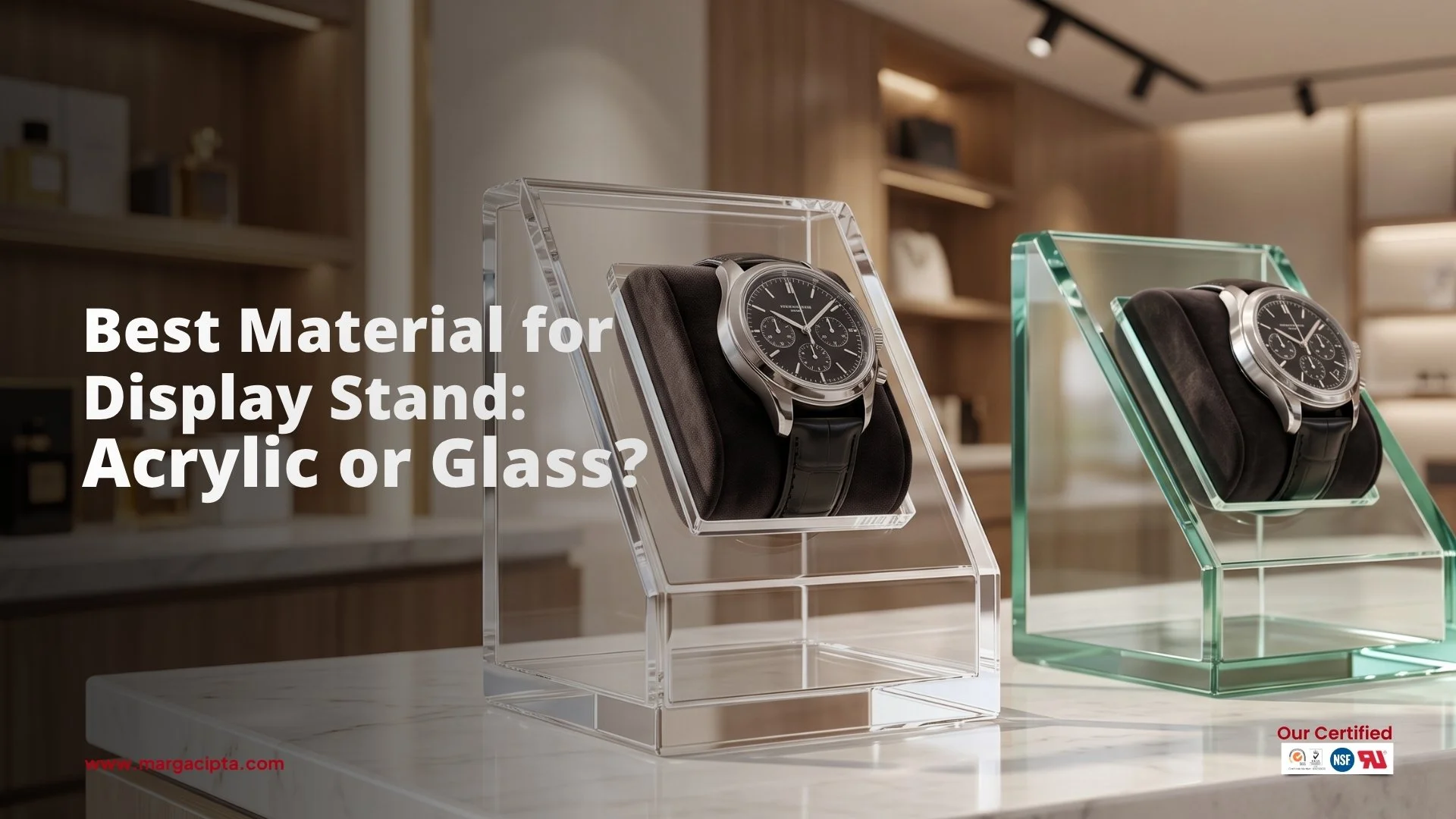
For most retail and commercial applications, acrylic is generally the best material for display stands. It provides excellent transparency, is significantly lighter than glass, offers better impact resistance, and is easier to fabricate into custom designs.
While glass remains a premium material for certain luxury applications, acrylic delivers a more practical balance of aesthetics, durability, and cost efficiency.
Acrylic vs Glass at a Glance
Here's a quick comparison between the two materials.
| Feature | Acrylic | Glass |
| Transparancy | Excellent | Excellent |
| Weight | Lightweight | Heavy |
| Impact Resistance | High | Low |
| Fabrication | Easy | Limited |
| Customization | Excellent | Moderate |
| Cost Efficiency | High | Moderate |
For most display stand projects, acrylic provides greater flexibility without sacrificing appearance.
Read also: Acrylic Sheet for Retail Displays: Benefits, Applications, and Design Ideas
Clarity and Appearance
Both acrylic and glass offer a clean, transparent look that showcases products effectively.
However, high-quality acrylic sheets provide excellent optical clarity while offering more design flexibility through various finishes, including:
- Clear
- Frosted
- Satin
- Colored
- Mirrored
These options allow businesses to create customized displays that match their branding.
Durability
Display stands are frequently moved, cleaned, and handled.
Acrylic performs well because it is more impact-resistant than glass. If accidentally dropped or bumped, acrylic is less likely to shatter.
Glass, while visually elegant, is more fragile and requires careful handling during transportation and installation.
Weight and Installation
Acrylic is considerably lighter than glass, making it easier to:
- Transport
- Install
- Rearrange
- Store
This advantage is especially valuable for exhibition displays, retail promotions, and modular merchandising systems.
Fabrication Flexibility
One of acrylic's biggest advantages is its compatibility with modern fabrication methods.
Acrylic sheets can be:
- Laser cut
- CNC machined
- Thermoformed
- Engraved
- UV printed
This allows designers to produce highly customized display stands with clean edges and intricate details.
Glass generally requires more specialized processing and offers fewer customization options.
Cost Considerations
Acrylic is often the more cost-effective solution.
Lower transportation costs, easier fabrication, and reduced breakage risks contribute to better overall project value.
For businesses producing multiple display stands, acrylic offers significant long-term savings.
When Glass May Be Suitable
Although acrylic is preferred for most applications, glass may still be suitable for:
- Luxury furniture
- Permanent architectural installations
- High-end decorative displays
However, these projects often involve higher installation costs and stricter handling requirements.
Read also: How to Bend Acrylic Sheet: Methods, Tools, and Best Practices
Why Material Quality Matters
Regardless of the material chosen, quality has a direct impact on the final result.
Premium acrylic sheets provide:
- Better clarity
- Consistent thickness
- Cleaner fabrication
- Improved durability
- Long-lasting appearance
Marga Cipta supplies high-quality acrylic sheets suitable for display stands, retail displays, product showcases, and commercial fabrication projects.
Conclusion
When comparing the best material for display stand—acrylic or glass—acrylic is the preferred choice for most retail, commercial, and promotional applications.
Its combination of clarity, lightweight construction, durability, and fabrication flexibility makes it a reliable solution for modern display systems.
Build Better Display Stands with Marga Cipta
Looking for premium acrylic sheets for your next display project? Marga Cipta offers high-quality acrylic sheets in various sizes, thicknesses, and finishes to meet your fabrication needs.
For inquiries or orders, email info@margacipta.com.
For product updates, inspiration, and application ideas, follow Instagram @margacipta.
.webp)
