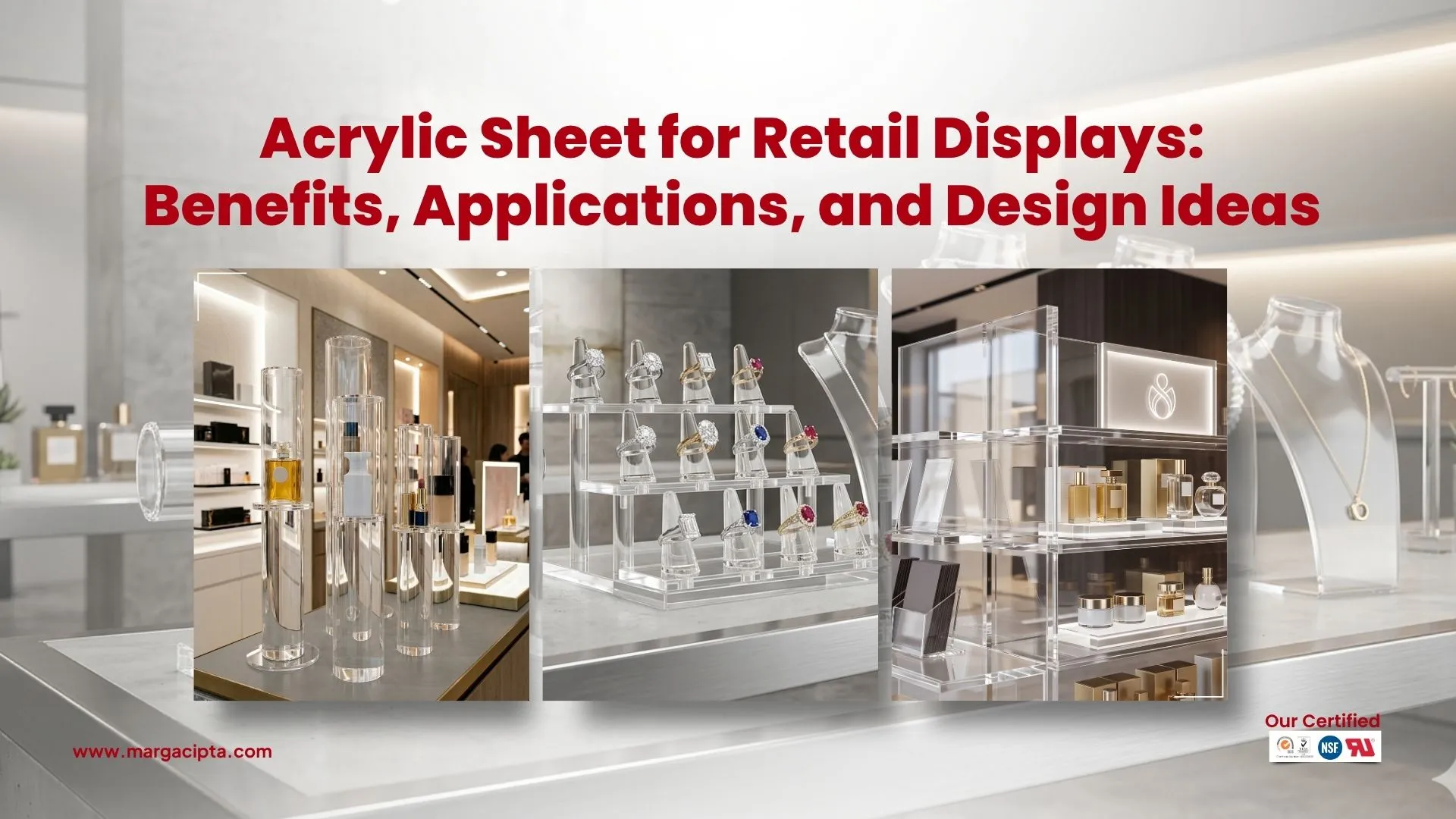
Acrylic Sheet for Retail Displays: Benefits, Applications, and Design Ideas

Informational

Acrylic sheet is one of the best materials for retail displays because it combines excellent clarity, durability, lightweight performance, and design flexibility. From product stands and display cases to shelf dividers and promotional signage, acrylic helps retailers create attractive displays that enhance the customer experience.

Whether you're designing a boutique, supermarket, showroom, or exhibition booth, acrylic sheets offer a professional solution for showcasing products effectively.

Why Acrylic Is Popular for Retail Displays

Retail displays need to be visually appealing while remaining durable enough for daily use. Acrylic meets both requirements by offering a clean, modern appearance and reliable performance.

Compared to traditional materials, acrylic provides several advantages:

  • Crystal-clear transparency
  • Lightweight construction
  • Good impact resistance
  • Easy fabrication
  • Wide variety of finishes and colors

These features make acrylic suitable for both permanent and seasonal retail displays.

Read also: Food Grade Acrylic: Safe Choice for Your F&B Business

Key Benefits of Acrylic Sheet for Retail Displays

1. Excellent Product Visibility

Clear acrylic allows customers to focus on the displayed products rather than the display structure itself.

Its glass-like transparency enhances product presentation without obstructing visibility.

2. Lightweight Yet Durable

Retail displays are often moved or rearranged. Acrylic's lightweight nature makes transportation and installation easier while maintaining good structural strength.

3. Easy to Fabricate

Acrylic sheets can be:

  • Laser cut
  • CNC machined
  • Engraved
  • UV printed
  • Thermoformed

This flexibility allows retailers to create customized display solutions for different products.

4. Professional Appearance

Available in clear, colored, frosted, satin, and mirrored finishes, acrylic complements various retail concepts, from luxury boutiques to modern convenience stores.

Common Applications

Acrylic sheets are used in numerous retail display applications.

Popular examples include:

1. Product Display Stands

Ideal for cosmetics, electronics, jewelry, accessories, and packaged goods.

2. Display Boxes and Cases

Transparent acrylic protects products while allowing customers to view them clearly.

3. Shelf Dividers

Acrylic helps organize merchandise neatly while maintaining a clean visual appearance.

4. Promotional Sign Holders

Retailers frequently use acrylic holders for pricing information, promotional materials, and advertisements.

5. Point-of-Purchase Displays

Custom acrylic displays attract attention and encourage impulse purchases.


Design Ideas for Acrylic Retail Displays

Acrylic offers endless design possibilities.

Some popular concepts include:

  • Minimalist transparent display stands
  • Layered acrylic shelving
  • Illuminated acrylic displays
  • Colored acrylic branding elements
  • Floating product displays
  • Modular display systems

These designs help create a premium shopping environment while maximizing product visibility.

Choosing the Right Acrylic Sheet

When selecting acrylic sheets for retail displays, consider:

  • Required thickness
  • Display size
  • Product weight
  • Surface finish
  • Indoor or outdoor use

Using the appropriate specification ensures both durability and aesthetic appeal.

Read also: Acrylic Application for Accessories: Stylish, Durable, and Versatile

Why High-Quality Acrylic Matters

Retail displays represent your brand image.

High-quality acrylic sheets provide:

  • Superior clarity
  • Consistent thickness
  • Better edge finishing
  • Improved durability
  • Reliable fabrication performance

Marga Cipta supplies premium acrylic sheets suitable for retail displays, visual merchandising, signage, and custom fabrication projects.


Conclusion

Acrylic sheet for retail displays offers an ideal combination of clarity, durability, and design flexibility. Its versatility makes it suitable for a wide range of commercial environments, helping businesses present products professionally while enhancing the customer experience.

Choosing high-quality acrylic sheets ensures long-lasting retail displays that remain attractive and functional over time.

Looking for Premium Acrylic Sheets?

Marga Cipta offers high-quality acrylic sheets in various thicknesses, colors, and finishes for retail displays, signage, and custom fabrication.

For inquiries or orders, email info@margacipta.com.

For product information, inspiration, and the latest updates, follow Instagram @margacipta.


News Release

Acrylic for Industrial Use: From Machine Guards to Safety Barriers | MC® Cast Acrylic

In modern industrial environments, safety, efficiency, and durability are top priorities. As factories and facilities continue to upgrade their operations in 2026, the demand for reliable materials has increased, especially for applications requiring strength, visibility, and long-term cost efficiency.

One material that stands out is acrylic for industrial use, offering superior clarity, impressive durability, and adaptability across various sectors.

MC® Cast Acrylic Sheet by Marga Cipta provides industry-grade performance suitable for manufacturing, warehousing, food processing, automotive, and many other industrial applications.

1. Clear Visibility for Machine Guards and Safety Shields

Industrial machines often involve fast-moving parts that require proper guarding without compromising visibility.

Acrylic sheet is widely used for machine guards, equipment shields, and protective covers due to its excellent optical clarity and high impact resistance.

Key advantages include:

  • Crystal-clear visibility for operators
  • Safer monitoring of machine operations
  • Stronger impact resistance than glass
  • Lightweight design that reduces mechanical load

Machine guards made from acrylic help reduce workplace accidents while maintaining efficient workflow.

Read also: Acrylic Application for Accessories: Stylish, Durable, and Versatile

2. Durable and Lightweight Safety Barriers

Many factories and warehouses use safety barriers to separate work zones, protect workers, and guide traffic. Acrylic barriers are an ideal solution because they are:

  • Durable and long-lasting
  • Resistant to cracking
  • Easy to install and relocate
  • Suitable for indoor and semi-outdoor environments

They maintain a professional, clean appearance while providing essential physical protection. From forklift lanes to assembly lines, acrylic safety barriers help create structured and safe workplaces.

3. Enclosures and Covers for Sensitive Equipment

Acrylic for industrial use is also favored for equipment enclosures that need to be both protective and visually accessible. Common applications include:

  • Electrical panel covers
  • Dust protection enclosures
  • Laboratory instrument housing
  • Chemical processing equipment covers

Since acrylic is non-conductive and resistant to corrosion, it is an excellent material for environments requiring stable, protective enclosures.

4. Acrylic in Clean Rooms and Food Processing

Industries such as pharmaceuticals, medical manufacturing, and food processing require materials that support cleanliness and hygiene. Acrylic surfaces are:

  • Easy to clean and sanitize
  • Resistant to chemicals and moisture
  • Non-porous and hygienic

These properties make acrylic suitable for partition walls, inspection windows, and protective shields in controlled environments.

Read also: Acrylic Sheet for Interior Design: Modern Applications for 2026

5. Cost-Efficient Alternative to Glass

Compared to tempered or laminated glass, acrylic offers several economic benefits:

  • Lower weight reduces installation and transportation costs
  • Higher durability decreases replacement frequency
  • Safer breakage characteristics reduce workplace hazards

This makes acrylic a practical long-term investment for industrial facilities aiming to optimize operational costs without sacrificing quality or safety.

Conclusion

From machine guards to safety barriers and equipment enclosures, acrylic for industrial use provides a strong, versatile, and efficient solution for modern industrial environments.

Its clarity, impact resistance, lightweight structure, and cost-efficiency make it one of the most reliable materials for today's facilities.

MC® Cast Acrylic Sheet by Marga Cipta continues to support industries with consistent quality and performance, helping businesses operate safely, efficiently, and sustainably.

Want to order? E-mail us at info@margacipta.com and get more information about our acrylic products.

Acrylic vs Polycarbonate: Which One Should You Use?

When choosing a plastic sheet for your project, two materials often come to mind: acrylic and polycarbonate. While both are widely used for signage, protective panels, and displays, the decision between them depends on what matters most: strength, clarity, or cost.

In this article, we compare acrylic and polycarbonate across key aspects and explain why acrylic may be the better solution for most everyday applications.

Strength: Durable, But Do You Need Extreme Impact Resistance?

Polycarbonate is often praised for its extreme impact resistance—up to 250 times stronger than glass. It’s frequently used in bulletproof windows, riot shields, and industrial machinery guards. If you're designing for high-risk environments with potential heavy impact, polycarbonate might make sense.

But here’s the reality: most applications don't need that level of impact resistance.

Acrylic, though not as tough as polycarbonate, is still up to 10 times stronger than glass. For general uses like signage, display cases, skylights, or protective barriers, acrylic offers more than enough durability without the extra cost.

Read also: Benefits of Using Clear Cast Acrylic Sheet

Clarity: Acrylic Offers Superior Visual Appeal

When it comes to optical clarity, acrylic takes the lead. Acrylic sheets provide up to 92% light transmission, giving them a crystal-clear, glass-like appearance. They’re less likely to yellow over time and are known for maintaining their clarity in outdoor and indoor environments.

Polycarbonate, on the other hand, may appear slightly duller and can develop a yellowish tint after prolonged exposure to UV light—unless treated with an extra coating.

If visual presentation matters, especially in retail, architectural, or decorative use, acrylic is the smarter choice.

Cost: Acrylic is More Budget-Friendly

From a pricing perspective, acrylic is generally more affordable than polycarbonate.

For businesses or projects that need large-scale installations—like signage, partitions, or decorative panels—acrylic provides an ideal balance of performance and price.

Polycarbonate’s high cost only makes sense when extreme toughness is necessary. For most users, choosing acrylic means getting a high-quality material without overspending.

Ease of Fabrication and Maintenance

Another advantage of acrylic is how easy it is to cut, drill, polish, and thermoform. You’ll get cleaner cuts and smoother edges, making it perfect for projects that require precision or aesthetic finishes.

Polycarbonate is tougher to work with and prone to scratches without special care. Acrylic is also easier to clean and maintain, requiring only mild soap and water.

Read also: Why Cast Acrylic Is Better Than Glass: Benefits You Should Know

When Should You Choose Acrylic?

Unless you’re building for high-impact or industrial-grade applications, acrylic is the practical, beautiful, and cost-effective option. It's the go-to choice for:

  • Retail displays and signage

  • Home and office decor

  • Windows and skylights

  • Sneeze guards and partitions

  • Lighting covers and illuminated signs

Both acrylic and polycarbonate have their place in the market. But if your project prioritizes clarity, affordability, and ease of use, then acrylic is clearly the winner.

It offers excellent strength, beautiful transparency, and lasting value—perfect for a wide range of uses without breaking the budget.

Margacipta Wirasentosa provide high-quality cast acrylic sheets that are reliable, customizable, and ready to elevate your next project.

Acrylic Sheet for Display Stand: Best Thickness and Type to Use

Acrylic sheet has become one of the most popular materials for display stands due to its clarity, durability, and versatility. Whether used in retail stores, exhibitions, or offices, choosing the right acrylic sheet for display stand is essential to ensure both aesthetics and functionality.

However, many people still struggle to determine the best thickness and type for their specific needs.

Why Acrylic Sheet is Ideal for Display Stands

Acrylic offers several advantages compared to glass or other materials:

  • High transparency similar to glass but lighter
  • Shatter-resistant and safer to use
  • Easy to fabricate (cutting, bending, engraving)
  • Professional and modern appearance

These qualities make acrylic sheets a top choice for product displays, signage, brochure holders, and more.

Read also: A Step-by-Step Guide on How to Cut Acrylic Sheet Safely

Best Thickness for Acrylic Display Stand

Choosing the right thickness depends on the size and purpose of the display.

Here are common recommendations:

  • 2-3 mm:
    Suitable for small, lightweight displays such as price tags or brochure holders.
  • 4-5 mm:
    Ideal for medium-sized display stands with moderate weight.
  • 6 mm and above:
    Recommended for larger or heavy-duty displays that require extra strength and stability.

Using acrylic that is too thin may cause bending or cracking, while overly thick sheets can increase costs unnecessarily.

Types of Acrylic Sheet

Understanding the different types of acrylic is equally important.

1. Cast Acrylic

  • Higher clarity and premium finish
  • Better for laser cutting and polishing
  • More durable and resistant to chemicals

Best for high-end display stands where appearance matters.

2. Extruded Acrylic

  • More affordable
  • Consistent thickness
  • Easier for mass production

Suitable for standard display applications with budget considerations.

Clear vs Colored Acrylic

  • Clear acrylic: Most common, ideal for showcasing products without distraction
  • Colored acrylic: Adds branding and visual appeal
  • Frosted acrylic: Provides a premium, soft look and reduces glare

The choice depends on branding and display goals.

Read also: How to Choose UV Resistant Acrylic Sheets for Outdoor Applications

Tips for Choosing the Right Acrylic Sheet

To ensure the best result:

  • Match thickness with the load and size of display
  • Choose cast acrylic for premium finishes
  • Consider environment (indoor vs outdoor use)
  • Ensure proper cutting and bending process

Common Mistakes to Avoid

  • Using acrylic that is too thin for heavy products
  • Ignoring surface finish quality
  • Choosing the wrong type for fabrication method

These mistakes can reduce durability and visual impact.

Conclusion

Selecting the right acrylic sheet for the display stand involves balancing thickness, type, and purpose. By understanding these factors, you can create displays that are both durable and visually appealing.

Looking for high-quality acrylic sheets?

Marga Cipta provides a wide range of acrylic sheets with various thicknesses and types, suitable for display stands, signage, and custom applications. Get the right material to elevate your display quality.

Things to Check Before Buying Acrylic

Acrylic sheets are widely used in industries such as signage, architecture, furniture, and even food-related applications. But with so many options available, knowing how to choose acrylic sheets is essential to ensure quality, safety, and durability.

1. Decide Between Cast or Extruded Acrylic

There are two main types of acrylic sheets:

  • Cast Acrylic: Known for superior optical clarity and durability, making it ideal for premium applications.
  • Extruded Acrylic: More cost-effective with consistent thickness, great for general purposes.

2. Check Thickness and Size Options

Different projects require different sheet thicknesses and dimensions. Make sure the supplier offers the right size to fit your application needs.

Read also: Choose the Right Cast Acrylic Color for Your Project

3. Evaluate Optical Clarity

High-quality acrylic should be crystal clear, with excellent light transmission similar to glass. Avoid sheets that look cloudy or yellowish, which usually means lower grade acrylic.

4. Consider Durability and Resistance

Choose acrylic that offers impact resistance, UV protection, and weather durability, especially for outdoor use. This ensures long-lasting performance.

5. Look for Certification and Safety Standards

For food displays or hygienic environments, select acrylic sheets that have NSF or FDA certification to guarantee safety in food contact applications.

Read also: Acrylic vs Polycarbonate: Which One Should You Use?

6. Work with a Trusted Supplier

A reputable supplier ensures consistent product quality and adherence to international standards, reducing risks for your projects.

Conclusion

Understanding how to choose acrylic sheets will help you make the best decision for your projects. From material type and thickness to certifications and supplier reliability, every factor matters in achieving the desired results.

Looking for premium acrylic sheets? Marga Cipta is a trusted manufacturer of cast acrylic sheets with NSF-certified options (clear and white opal). Contact us today at info@margacipta.com to find the right acrylic for your needs!