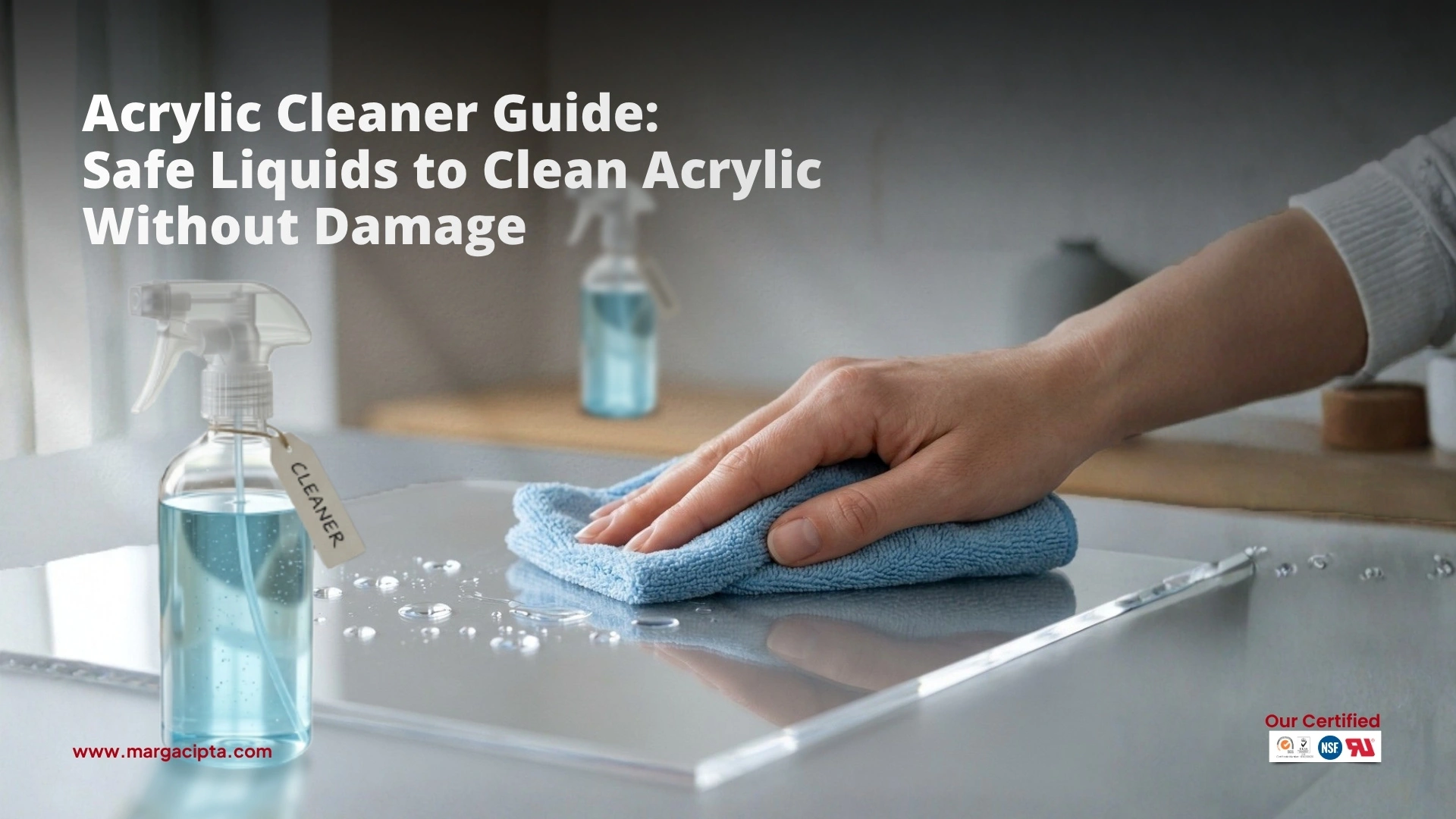
Acrylic Cleaner Guide: Safe Liquids to Clean Acrylic Without Damage

Informational

The best acrylic cleaner is a mild, non-abrasive liquid that cleans the surface without causing scratches, cloudiness, or chemical damage.

Using the wrong cleaner can permanently affect the appearance of acrylic sheets, especially clear acrylic surfaces.

To maintain clarity and durability, it is important to use safe cleaning solutions specifically suited for acrylic materials.

Why Acrylic Requires Special Cleaning

Acrylic sheets are durable and visually appealing, but their surface is more sensitive than glass. Using harsh chemicals or rough cleaning tools may cause:

  • Fine scratches
  • Cloudy appearance
  • Surface damage
  • Reduced clarity over time

Proper cleaning helps preserve the smooth finish and extends the lifespan of the material.

Read also: Why Cast Acrylic Is Better Than Glass: Benefits You Should Know

Best Liquids to Clean Acrylic

1. Mild Soap and Water

A mixture of mild liquid soap and clean water is one of the safest options for acrylic cleaning.

Benefits:

  • Gentle on the surface
  • Easy to use
  • Suitable for regular maintenance

Use a soft microfiber cloth to wipe the acrylic gently.

2. Specialized Acrylic Cleaner

Acrylic-specific cleaners are designed to remove dust, fingerprints, and dirt without damaging the material.

These cleaners help:

  • Reduce static buildup
  • Maintain clarity
  • Minimize streaks

They are recommended for displays, signage, and premium acrylic applications

3. Distilled Water

For light dust and minor cleaning, distilled water can be used safely. It helps prevent mineral spots and streaks that may occur with regular tap water.

Cleaning Tools to Use

When cleaning acrylic, always use:

  • Soft microfiber cloths
  • Non-abrasive wipes
  • Gentle wiping motions

Avoid:

  • Paper towels
  • Rough fabrics
  • Scrubbing pads

These materials can create fine scratches on the surface.

Liquids to Avoid

Certain chemicals should never be used on acrylic sheets.

Avoid:

  • Ammonia-based cleaners
  • Alcohol-based liquids
  • Glass cleaners
  • Strong solvents

These substances can cause acrylic to become cloudy, brittle, or cracked over time.

Proper Cleaning Technique

For best results:

  1. Remove loose dust first
  2. Apply cleaner gently
  3. Wipe in straight motions
  4. Dry using a clean microfiber cloth

Avoid circular scrubbing, as it may create visible swirl marks.

Read also: What Is Cast Acrylic Used For? A Closer Look

Why Acrylic Quality Also Matters

High-quality acrylic sheets generally offer:

  • Better surface consistency
  • Improved resistance to minor scratches
  • Longer-lasting clarity

Using premium acrylic materials helps maintain appearance even with frequent cleaning.

Marga Cipta supplies high-quality acrylic sheets suitable for displays, signage, fabrication, and decorative applications.

Conclusion

Choosing the right acrylic cleaner is essential to maintaining the clarity and durability of acrylic sheets.

Safe cleaning liquids such as mild soap solutions and specialized acrylic cleaners help prevent scratches and damage. Combined with proper cleaning techniques and high-quality materials, acrylic surfaces can remain clear and visually appealing for a long time.

Ready to explore our cast acrylic options? At Margacipta Wirasentosa, we offer high-quality clear cast acrylic sheets from 100% virgin MMA in various thicknesses and custom sizes to fit your needs.

Reach out to our Instagram or download our Product Catalog for more information.


News Release

Acrylic Sheet for Exhibition Booths: Why Designers Prefer Acrylic

Acrylic sheet is one of the most popular materials for exhibition booths because it combines visual appeal, lightweight construction, and fabrication flexibility.

From product displays and illuminated signage to decorative panels and branded installations, acrylic helps designers create exhibition spaces that attract attention and enhance visitor engagement.

Its versatility makes acrylic an ideal material for trade shows, expos, conferences, and promotional events.

Why Acrylic Is Ideal for Exhibition Booths

Exhibition booths need materials that are visually impressive, easy to transport, and durable enough for repeated use.

Acrylic meets these requirements by offering:

  • Excellent transparency
  • Lightweight construction
  • Good impact resistance
  • Easy fabrication
  • Premium appearance

Compared to heavier materials such as glass, acrylic simplifies installation while maintaining a modern, professional look.

Read also: Best Acrylic Thickness for Ornaments: Size Guide for Perfect Results

Benefits of Acrylic Sheet for Exhibition Booths

Lightweight and Easy to Transport

Exhibition structures are often assembled and dismantled multiple times.

Because acrylic is much lighter than glass, it reduces transportation costs and simplifies installation.

Flexible Design Possibilities

Acrylic sheets can be fabricated into virtually any shape using processes such as:

  • Laser cutting
  • CNC machining
  • Thermoforming
  • Engraving
  • UV printing

This allows designers to create customized booth elements that reinforce brand identity.

Excellent Visual Presentation

Clear acrylic provides outstanding transparency, while colored, frosted, satin, and mirrored acrylic offer additional creative possibilities.

These finishes help designers produce visually striking exhibition spaces that stand out in crowded venues.

Durable for Repeated Events

High-quality acrylic maintains its appearance even after repeated transportation and installation.

Its durability makes it suitable for businesses that participate in multiple exhibitions throughout the year.

Common Applications

Acrylic sheets are widely used throughout exhibition booth designs.

Typical applications include:

1. Product Display Cases

Protect valuable products while maintaining excellent visibility.

2. Signage and Branding

Create illuminated signs, logos, and directional graphics.

3. Information Panels

Display company profiles, product specifications, and promotional content.

4. Decorative Features

Use acrylic partitions, backdrops, and wall panels to enhance booth aesthetics.

5. Interactive Displays

Integrate acrylic into digital kiosks and touchscreen enclosures.

Choosing the Right Acrylic Sheet

When selecting acrylic sheets for exhibition booths, consider:

  • Required thickness
  • Surface finish
  • Color options
  • Fabrication requirements
  • Lighting effects

Using the appropriate acrylic specification helps achieve both structural reliability and visual impact.

Read also: Laser Cut Acrylic Sheet: Benefits, Applications, and Design Tips

Why High-Quality Acrylic Matters

Exhibition booths represent your company's brand image.

Premium acrylic sheets provide:

  • Superior clarity
  • Consistent thickness
  • Better fabrication results
  • Cleaner finishing
  • Long-lasting durability

Marga Cipta manufactures premium cast acrylic sheets suitable for exhibition booths, retail displays, signage, architectural projects, and custom fabrication.

Conclusion

Acrylic sheet for exhibition booths offers an ideal balance of aesthetics, durability, and fabrication flexibility.

Its lightweight structure, premium appearance, and compatibility with modern manufacturing techniques make it a preferred material for designers creating impactful exhibition environments.

Build Outstanding Exhibition Booths with Marga Cipta

Marga Cipta supplies premium cast acrylic sheets in various thicknesses, colors, and finishes to support exhibition, retail, signage, and architectural projects.

For inquiries or orders, email info@margacipta.com.

For product inspiration and the latest updates, follow Instagram @margacipta.

Does Acrylic Shatter? Find Out Its Strength and Durability

When comparing materials like glass and plastic, many people often ask: does acrylic shatter? The short answer is no, acrylic does not shatter like traditional glass. Instead, acrylic is designed to be far stronger, safer, and more durable. 

This makes it one of the most widely used materials across industries such as architecture, signage, interior design, and safety barriers.

Does Acrylic Shatter Like Glass?

Unlike glass, which can break into dangerous sharp shards, acrylic is impact resistant

If exposed to heavy force, acrylic is more likely to crack or break into large, blunt-edged pieces rather than splintering into tiny shards. This makes acrylic significantly safer for residential or commercial applications.

In fact, acrylic is up to 17 times stronger than glass, yet weighs only half as much. This balance of strength and lightness explains why industries worldwide are shifting toward acrylic as a glass alternative.

Read also: Do’s and Don’ts: Cleaning Acrylic Sheet the Right Way

Why Acrylic Is Safer Than Glass

The concern about shattering usually comes from using glass in high-risk environments. Glass windows, panels, and displays can be dangerous when broken. Acrylic solves this problem by offering:

  1. High Impact Resistance: Acrylic can withstand accidental knocks, falls, or collisions without shattering dangerously.
  2. Blunt Break Pattern: When acrylic does break, it forms larger, less hazardous fragments.
  3. Safe for Child and Public Environment: Because of its break-resistant nature, acrylic is commonly used in schools, hospitals, public displays, and even aquariums.

Factors That Affect Acrylic’s Durability

Although acrylic is strong, certain factors can influence whether it cracks or breaks under pressure:

  • Thickness of the Sheet: Thicker acrylic sheets are more resistant to cracking and can endure higher loads.
  • Quality of the Material: Sheets made from 100% virgin MMA (Methyl Methacrylate) are purer and more durable than those made with recycled material.
  • Environmental Conditions: Outdoor exposure to UV light, heat, and moisture can impact longevity if low-quality acrylic is used.
  • Installation and Handling: Proper cutting, drilling, and mounting prevent stress points that could cause cracking.

Real-World Applications of Acrylic

Thanks to its non-shattering nature, acrylic is a trusted material in industries that prioritize both safety and aesthetics:

  • Signage and Advertising Displays – Durable and weather-resistant, perfect for outdoor use.
  • Protective Barriers – Used in offices, retail counters, and public spaces to ensure safety without sacrificing visibility.
  • Construction and Architecture – Commonly found in windows, skylights, and partitions for their lightweight yet strong properties.
  • Furniture and Interior Design – Adds a modern, glass-like aesthetic without the fragility.
  • Medical and Food Industry – Acrylic with certifications like NSF ensures hygienic and safe usage.

Read also: Acrylic Sheet Thickness Guide: How to Choose the Right One

Does Acrylic Shatter Under Extreme Conditions?

While acrylic does not shatter like glass, it is not indestructible. Under extreme force or improper installation, acrylic may crack or snap. However, the breakage is still significantly safer than glass since it does not form sharp, splintered fragments.

In most cases, acrylic offers the perfect balance of strength, clarity, and cost-effectiveness.

So, does acrylic shatter? No, acrylic is designed to be a safer, stronger alternative to glass. With up to 17 times the strength of glass and excellent durability, acrylic is widely trusted in signage, construction, safety barriers, and interior design. 

While it may crack under extreme conditions, its breakage is far less hazardous compared to glass, making it a reliable choice for both commercial and residential applications.

PT Margacipta Wirasentosa offers high-quality cast acrylic made from 100% virgin MMA, with NSF-certified options for food contact applications.

Acrylic Sheet Price Factors: What Affects the Cost of Acrylic Sheets?

The cost of acrylic sheets depends on several factors, including material type, thickness, sheet size, surface finish, and fabrication requirements.

Understanding these factors can help businesses and buyers make informed purchasing decisions while selecting the right acrylic sheet for their applications.

Whether you're sourcing acrylic for signage, displays, interiors, or industrial projects, knowing what influences pricing can help you better plan your budget.

Why Acrylic Sheet Prices Vary

Not all acrylic sheets are manufactured the same way. Different production methods, material specifications, and finishing options can significantly impact the final cost.

The price of acrylic sheets reflects both the material quality and the intended application.

Read also: Why Cast Acrylic Is Better Than Glass: Benefits You Should Know

1. Type of Acrylic Sheet

One of the biggest factors affecting cost is the type of acrylic used.

Cast Acrylic

Cast acrylic is typically more expensive because it offers:

  • Better optical clarity
  • Superior engraving quality
  • Improved chemical resistance
  • Better overall finish

It is commonly used for premium signage, displays, and decorative applications.

Extruded Acrylic

Extruded acrylic is generally more cost-effective and suitable for standard fabrication projects. While it offers good performance, it may not provide the same level of quality as cast acrylic for certain applications.

2. Thickness of the Sheet

Thicker acrylic sheets require more raw material, resulting in higher costs.

For example:

  • 2 mm acrylic sheets are generally more affordable
  • 10 mm acrylic sheets cost significantly more due to increased material usage

Choosing the right thickness helps balance performance and budget.

3. Sheet Size and Dimensions

Larger acrylic sheets naturally cost more because they contain more material.

Custom sizes may also affect pricing due to:

  • Additional cutting processes
  • Material optimization requirements
  • Production efficiency considerations

Selecting standard sheet sizes can sometimes help reduce costs.

4. Surface Finish

Different finishes influence manufacturing complexity and pricing.

Common options include:

  • Clear acrylic
  • Satin acrylic
  • Frosted acrylic
  • Colored acrylic
  • Mirrored acrylic

Specialty finishes often carry higher costs because of additional production processes.

5. Color and Design Requirements

Colored acrylic sheets typically cost more than standard clear acrylic sheets.

Factors that contribute to pricing include:

  • Pigment quality
  • Color consistency
  • Manufacturing complexity

Special or custom colors may further impact overall costs.

6. Fabrication Requirements

Additional processing services can increase the total project cost.

Examples include:

  • Laser cutting
  • CNC cutting
  • Engraving
  • UV printing
  • Edge polishing

The more complex the fabrication process, the higher the final cost is likely to be.

7. Material Quality

Premium acrylic sheets often provide:

  • Better clarity
  • More consistent thickness
  • Improved durability
  • Better weather resistance

While higher-quality materials may have a higher initial price, they often deliver better long-term value and performance.

Read also: Clear Acrylic Sheet vs Glass: Pros, Cons & Key Differences

How to Optimize Acrylic Costs

To maximize value:

  • Choose the appropriate thickness
  • Select the right acrylic type
  • Avoid unnecessary customizations
  • Source materials from trusted suppliers

A well-planned specification helps achieve both performance and cost efficiency

Conclusion

Several acrylic sheet price factors influence the overall cost of a project, including material type, thickness, size, finish, and fabrication requirements.

Understanding these variables allows buyers to select the most suitable acrylic sheet while managing budgets effectively. Investing in high-quality acrylic can also provide long-term benefits through improved durability and performance.

Want to Order High-Quality Acrylic Sheets?

Marga Cipta offers premium acrylic sheets in various thicknesses, colors, and finishes for signage, displays, interiors, and fabrication projects.

For inquiries or orders, email info@margacipta.com.

For product updates, inspiration, and application ideas, follow Instagram @margacipta.

Cast Acrylic vs Extruded, Which One Is Better?

Acrylic sheets are a popular material in various industries. It is used from signage and interior design to industrial fabrication. 

However, many people struggle to understand the real difference and what to choose between cast acrylic and extruded acrylic for their projects.

While both materials may look similar at first glance, their performance, durability, and manufacturing quality set them apart.

Read more to know the key differences and explain why cast acrylic sheets are often the superior choice.

What is Cast Acrylic Sheet?

Cast acrylic sheet is made by mixing liquid methyl methacrylate monomer (MMA) with initiators and pouring it into a mold. This process allows the sheet to cure slowly, resulting in a high-quality finish and consistent thickness.

Advantages of Cast Acrylic

  • Higher optical clarity: Make it excellent for display cases and premium applications.
  • Greater chemical resistance: Ideal for laboratories or environments with exposure to solvents.
  • Easier to fabricate: Can be laser cut, machined, and polished with less internal stress.
  • Variety of colors and thicknesses: Better customization options.

Read also: Why Cast Acrylic Is Better Than Glass: Benefits You Should Know

What is Extruded Acrylic Sheet?

Extruded acrylic sheet is manufactured by pushing acrylic resin through a machine into a continuous sheet. This process is faster and more cost-efficient, which makes extruded acrylic widely available and affordable.

Advantages of Extruded Acrylic:

  • Cost-effective: Typically more affordable than cast acrylic.
  • Consistent thickness: Great for applications that require precise dimensions.
  • Good for vacuum forming and thermoforming: Softens faster when heated.
  • Smooth surface: Suitable for printing and general use.

Key Differences at a Glance

Feature

Cast Acrylic Sheet

Extruded Acrylic Sheet

Manufacturing Process

Mold Cast

Machine-extruded

Optical Clarity

Superior

Good

Thickness Tolerance

Slightly less consistent

Highly consistent

Fabrication

Easier to machine and polish

Softer, easier to thermoform

Chemical Resistance

Higher

Lower

Price

Higher

Lower

Which One Should You Choose?

The right acrylic sheet depends on your project needs:

  • Choose cast acrylic if you need superior clarity, better strength, or are doing high-end fabrication or laser cutting.
  • Choose extruded acrylic if you’re working with a tight budget, need consistent sizing, or plan to thermoform the material.

Read also: Choose the Right Cast Acrylic Color for Your Project

At Margacipta Wirasentosa, we provide high-quality cast acrylic sheets tailored for B2B needs. Whether you're producing product displays, signage, furniture, or custom designs, we have the right solution for you.

  • Available in multiple colors & finishes
  • Custom size & cutting options
  • Locally made in Indonesia

Understanding the difference between cast acrylic sheet vs extruded acrylic sheet is essential before starting your next project. Each has its strengths, and choosing the right one can save you time, cost, and effort.

Contact Marga Cipta today or visit our Instagram (@margacipta) for more product details.