
Acrylic continues to gain momentum as one of the most versatile materials across design, construction, and manufacturing industries. Known for being lightweight, strong, highly transparent, and easy to fabricate, acrylic is increasingly replacing traditional materials such as glass and metal.
As we move into 2026, acrylic is no longer limited to signage or displays. Its applications are expanding rapidly, opening new opportunities for businesses, designers, architects, and manufacturers. Below are the key acrylic usage trends predicted to shape design and industry in 2026.
One of the strongest acrylic usage trends in 2026 is the rise of acrylic interior panels for both commercial and residential buildings.
Why this trend is growing:
The rapid development of offices, retail spaces, hotels, and modern housing has increased demand for materials that are visually appealing, durable, and cost-efficient. Acrylic interior panels offer high clarity and a sleek, minimalistic look, making them ideal for partitions, wall panels, and decorative elements.
Compared to glass, acrylic is more affordable, lighter, and easier to install. Designers and architects also favor acrylic for its flexibility in color, thickness, and finish, allowing them to create modern interior concepts without compromising safety or aesthetics.
Read also: 100% Virgin MMA: The Key to High-Quality Acrylic Sheets
LED signage remains one of the most dominant acrylic applications heading into 2026.
Why this trend continues to rise:
Offline retail transformation is still strong, particularly in developing markets where physical stores continue to evolve. Many small and medium-sized businesses are renovating storefronts and upgrading visual branding, increasing demand for LED signage and display systems.
Acrylic is the preferred material for LED signage due to its excellent light transmission, smooth surface, and ability to diffuse light evenly. From illuminated logos and lightboxes to promotional displays, acrylic helps businesses create brighter, more attractive visual communication.
Sustainability and food security are driving the growth of urban farming, hydroponics, and smart agriculture—making acrylic greenhouse panels a key trend in 2026.
Why this trend is emerging:
Acrylic offers superior UV resistance, high transparency, and better impact strength compared to glass. These properties make it ideal for greenhouse roofs and walls, where consistent light transmission and durability are essential.
As urban farming expands into rooftops, compact land areas, and controlled environments, acrylic greenhouse panels provide a long-lasting, lightweight solution that supports plant growth while reducing maintenance costs.
Read also: Food Grade Acrylic: Safe Choice for Your F&B Business
Acrylic furniture and decorative items are gaining popularity, influenced heavily by social media-driven interior trends.
Why this trend is accelerating:
Clean, modern, and minimalist interiors are in high demand, and acrylic fits perfectly into this aesthetic. Furniture such as acrylic chairs, tables, shelves, and decorative panels offers a contemporary look without making spaces feel heavy.
In addition, e-commerce sellers increasingly use acrylic for DIY products and small household items. Consumers prefer materials that are lightweight, modern, durable, and visually appealing—qualities that acrylic delivers consistently.
The versatility of acrylic makes it increasingly relevant across industries beyond traditional applications. From architecture and retail to agriculture and lifestyle products, acrylic continues to adapt to changing market needs.
To support these growing demands, choosing a high-quality material is essential. MC® Cast Acrylic Sheet is a proven solution, offering consistent clarity, strength, and fabrication performance for both design and industrial applications.
Acrylic usage trends in 2026 highlight a clear shift toward materials that combine aesthetics, durability, and flexibility. Interior panels, LED signage, greenhouse systems, and furniture are just a few examples of how acrylic is shaping the future of design and industry.
By leveraging reliable materials like MC® Cast Acrylic Sheet, businesses can stay ahead of trends and unlock new opportunities in an evolving market.
.webp)
Acrylic becomes brittle due to factors such as improper cleaning, excessive heat exposure, UV damage, and poor material handling.
Over time, these conditions can weaken the structure of acrylic sheets, making them more prone to cracking or breaking.
Understanding what causes acrylic to become brittle is important for maintaining its durability and appearance.
Although acrylic is known for its strength and durability, it can lose flexibility if exposed to damaging conditions for extended periods.
Several common factors contribute to brittleness.
Read also: Best Acrylic Thickness for Plaque: Complete Guide for Durable Results
One of the biggest causes of brittle acrylic is the use of aggressive cleaning chemicals.
Chemicals such as:
can damage the acrylic surface and weaken its internal structure.
Over time, this may lead to:
Using acrylic-safe cleaners is essential for long-term durability.
High temperatures can affect the stability of acrylic sheets.
Continuous exposure to excessive heat may cause:
Acrylic should be kept away from direct heat sources or environments with extreme temperature fluctuations.
While many acrylic sheets have good UV resistance, prolonged outdoor exposure can still contribute to material aging.
Without proper UV protection, acrylic may gradually:
Using high-quality UV-resistant acrylic helps minimize this issue.
Incorrect fabrication methods can introduce stress into the material.
Examples include:
These internal stresses may not appear immediately but can eventually cause cracks or brittleness.
Using proper fabrication equipment and high-quality acrylic sheets helps reduce the risk.
Low-quality acrylic sheets are generally more susceptible to damage and brittleness.
Inferior materials may have:
This is why choosing reliable acrylic suppliers is important for long-term performance.
To maintain acrylic durability:
Proper maintenance significantly extends the lifespan of acrylic applications.
Premium acrylic sheets provide:
For businesses and manufacturers, high-quality materials help reduce production defects and improve long-term reliability.
Marga Cipta supplies high-quality acrylic sheets suitable for signage, fabrication, displays, and decorative applications.
Read also: Best Acrylic Thickness for Ornaments: Size Guide for Perfect Results
Understanding what makes acrylic brittle helps prevent unnecessary damage and extends the lifespan of acrylic materials.
Factors such as harsh chemicals, heat exposure, UV damage, and improper fabrication can weaken acrylic over time. By using proper handling methods and high-quality acrylic sheets, you can maintain durability and achieve better long-term performance.
Ready to explore our cast acrylic options? At Margacipta Wirasentosa, we offer high-quality clear cast acrylic sheets from 100% virgin MMA in various thicknesses and custom sizes to fit your needs.
Reach out to our Instagram or download our Product Catalog for more information.
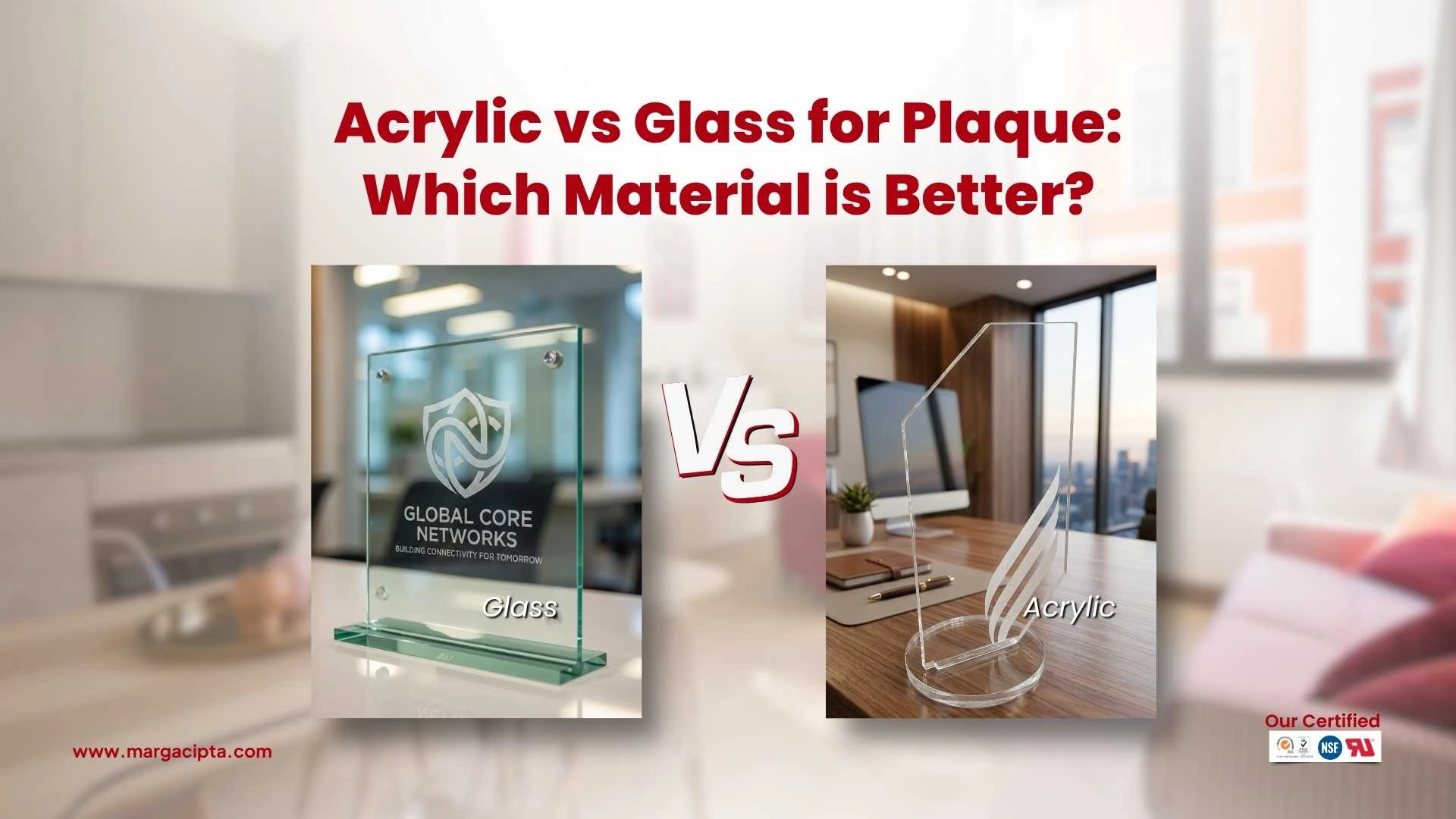
Acrylic is generally better than glass for plaque applications.
It offers higher impact resistance, lighter weight, and easier fabrication while still maintaining a clear, premium appearance.
For most commercial and design purposes, acrylic provides a more practical and efficient solution.
|
Feature |
Acrylic |
Glass |
|
Impact Resistance |
High (does not shatter easily) |
Low (breakable) |
|
Weight |
Lightweight |
Heavy |
|
Clarity |
Excellent |
Excellent |
|
Fabrication |
Easy |
Limited |
|
Cost |
More efficient |
Higher overall cost |
Acrylic is significantly more impact-resistant than glass. It does not shatter easily, making it safer for use in offices, public spaces, and high-traffic environments.
Glass, while visually appealing, is fragile and prone to breaking. This can lead to safety risks and higher replacement costs.
Read also: How to Choose UV Resistant Acrylic Sheets for Outdoor Applications
Both materials offer a clean and transparent look, but acrylic has a more consistent and modern finish.
Acrylic sheets also provide better results for:
Glass may have a slight tint depending on its composition, while acrylic maintains clearer visual consistency.
Acrylic is much lighter than glass, making it easier to handle, transport, and install.
This is especially important for:
Glass requires more careful handling and stronger support systems due to its weight.
Acrylic is highly versatile and compatible with modern production techniques.
It can be:
Glass, on the other hand, requires specialized tools and has limited flexibility for customization.
Acrylic is generally more cost-effective than glass when considering:
Its durability also reduces the risk of damage, making it a more reliable long-term investment.
Read also: What Acrylic to Use for Cake Topper: A Complete Material Guide
For most plaque applications, acrylic offers the best balance between:
This is why many businesses and manufacturers choose acrylic sheets as their primary material.
Marga Cipta provides high-quality acrylic sheets that are suitable for various fabrication methods, helping ensure consistent and professional results.
In the comparison of acrylic vs glass for plaque, acrylic stands out as the better overall material.
It combines strength, clarity, and flexibility, making it ideal for modern plaque production. For businesses looking for efficiency and reliability, acrylic is the smarter choice.
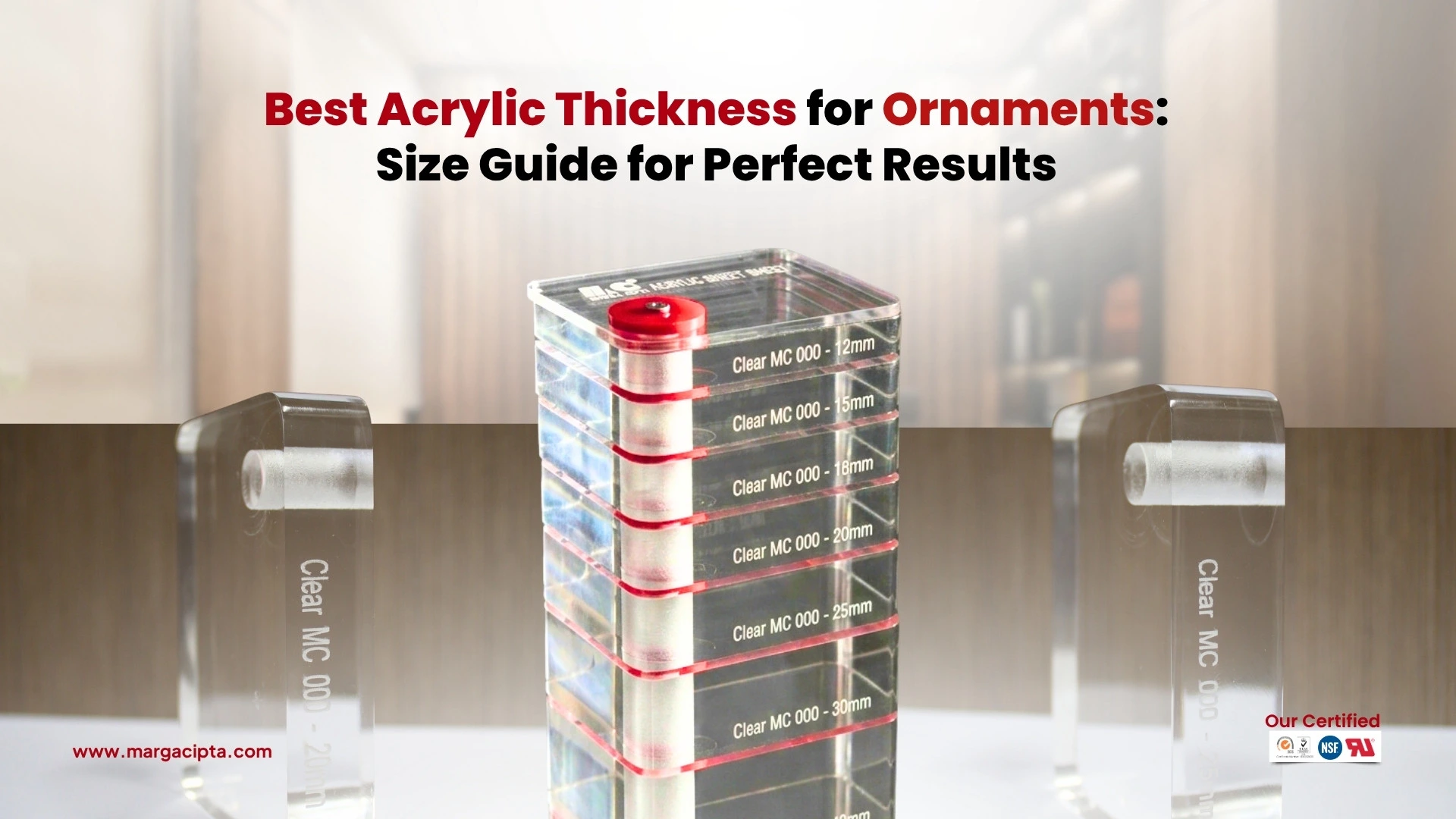
The best acrylic thickness for ornaments is typically between 2 mm and 3 mm.
This range provides the ideal balance between durability, lightweight structure, and ease of cutting.
Choosing the right thickness is crucial to ensure that ornaments are strong enough to hold their shape while still looking clean and refined.
Ornaments are often designed to be lightweight and decorative. Using the wrong thickness can affect both appearance and performance:
The right thickness ensures a professional finish without compromising functionality.
Read also: Colored Acrylic Sheet for Ornaments: Types, Colors, and Applications
Here’s a practical guide:
2 mm acrylic sheet
3 mm acrylic sheet
For most applications, these two thickness options cover the majority of design needs.
Larger ornaments require thicker acrylic to maintain shape and prevent bending.
Intricate designs benefit from thinner sheets for easier cutting and finer detail.
If the ornament will be handled frequently or used long-term, slightly thicker acrylic offers better durability.
Acrylic sheets are widely used in fabrication processes such as:
Using the correct thickness ensures clean edges, precise cuts, and minimal material waste.
Thinner sheets are easier to cut, while thicker sheets provide a more solid feel.
Acrylic is a preferred material because it offers:
These qualities make it suitable for both handmade and mass-produced ornaments.
Read also: Acrylic vs Glass for Plaque: Which Material is Better?
Even with the right thickness, material quality plays a key role.
High-quality acrylic sheets provide:
For businesses, this ensures more efficient production and consistent output.
Marga Cipta offers high-quality acrylic sheets suitable for various ornament applications, supporting both small-scale and bulk production needs.
The best acrylic thickness for ornaments is generally between 2 mm and 3 mm, depending on size and design.
By choosing the right thickness and using high-quality acrylic sheets, you can achieve ornaments that are durable, lightweight, and visually appealing.
Ready to explore our cast acrylic options? At Margacipta Wirasentosa, we offer high-quality clear cast acrylic sheets from 100% virgin MMA in various thicknesses and custom sizes to fit your needs.
Reach to our Instagram or download our Product Catalog for more information.